
Journey 1:
Foundations of Compassionate Healthcare
The Foundations of Compassionate Healthcare is designed to reconnect healthcare with its deepest purpose - the practice of caring.
In modern health care systems shaped by speed, complexity, and constant demand, compassion can quietly move to the margins. This journey brings it back to the center, not as an ideal, but as a practical foundation for how care is delivered, experienced, and sustained.
This is not about adding more to an already full workload. It is about returning to what already exists within each of us: the intention to care, the ability to form human connections, and the awareness that shapes how we show up in every encounter.
As healthcare professionals, we are entrusted with caring for people during some of the most vulnerable moments of their lives. And yet, many of us can feel disconnected or unfulfilled in the very work that once inspired us. This journey is an invitation to reconnect with that sense of meaning, to rediscover fulfillment through the care we give, the presence we bring, and the compassion we practice each day.
The early modules focus on the inner foundations that enable compassionate care. Before communication skills, before conflict management, and before system change, there must be clarity about what compassion is, why it matters, and how it is lived moment to moment in real clinical environments.
PS: We call this a journey because the ideas we explore in these modules have the potential to TRANSFORM us.
But, as with any meaningful change, transformation does not happen through concepts alone. It happens through practice, reflection, and returning to these ideas again and again. Over time, what feels new and intentional can become natural and part of who we are.
We are here to travel that journey with you. Like any journey, there will be moments of insight and moments of challenge, days when it feels easy and days when it feels difficult. Along the way, we will share experiences, learn from one another, and grow together.
Learning Design Team
-

Sivaranjani Penna
COURSE DIRECTOR
MD | Internal Medicine Physician | USA -

Melanie Bateman
ASSOCIATE COURSE DIRECTOR
BSN | Registered Nurse | USA -

Gopikrishna Paladugu
COURSE AUTHOR
MD | Hospitalist Medical Director | USA -

Kaushik Bhunia
COURSE AUTHOR
MD | Nephrology and Internal Medicine | USA -

Swetha RK
RESEARCH SUPPORT
India
Acknowledgements:
Our Sincere Acknowledgements to Venkatesh Anandasayanam for the Conversations that led to the Inception of Journey 1 of the Learning Pathway
Learn New Approaches
Through thoughtful examples and guided exploration, you'll learn to approach obstacles with fresh eyes. This course is about unlocking flexibility, not following formulas.
Build Confidence
We break things down into simple, manageable parts so you never feel overwhelmed. As you progress, you’ll develop both skill and self-assurance, one step at a time.
Gain Practical Tools
Each lesson is designed to equip you with useful strategies you can immediately put into action. It’s about learning with purpose and seeing real results.
Educational Design of the Learning Journey
The learning journey is designed as a modular, self-paced program combining concise video lessons, evidence-informed insights, and reflective practice.
Total Watch Time: approximately 2.5 hours (150 minutes)
Structure
Modules:
The course contains 8 modules, each focusing on a key dimension of compassionate healthcare
Lessons within Each Module:
Each module contains 3–7 short lessons that explore specific concepts in a structured and progressive manner.
Lessons are concise and focused to support effective learning without overwhelming participants.
Each lesson includes the following elements:
Overview
A brief introduction to the topic and its relevance to clinical practice.Learning Objectives
Clear goals outlining what participants will learn from the lesson.Video Lesson (Primary Content)
Short video presentations that explain the concept and its practical application.Video Transcript (Optional)
A full transcript to support accessibility and deeper engagement.Supporting Evidence
Key research findings and references that inform the lesson content.Extended Reading
A written, deeper version of the video content for participants who wish to explore the topic in greater depth.Reflection Prompt (Recommended)
Guided reflection questions designed to encourage deeper personal and professional insight.
Please follow the link to enroll in Learning Journey-1
Module 1: What Compassion Is • Why It Matters • Historical Context
-
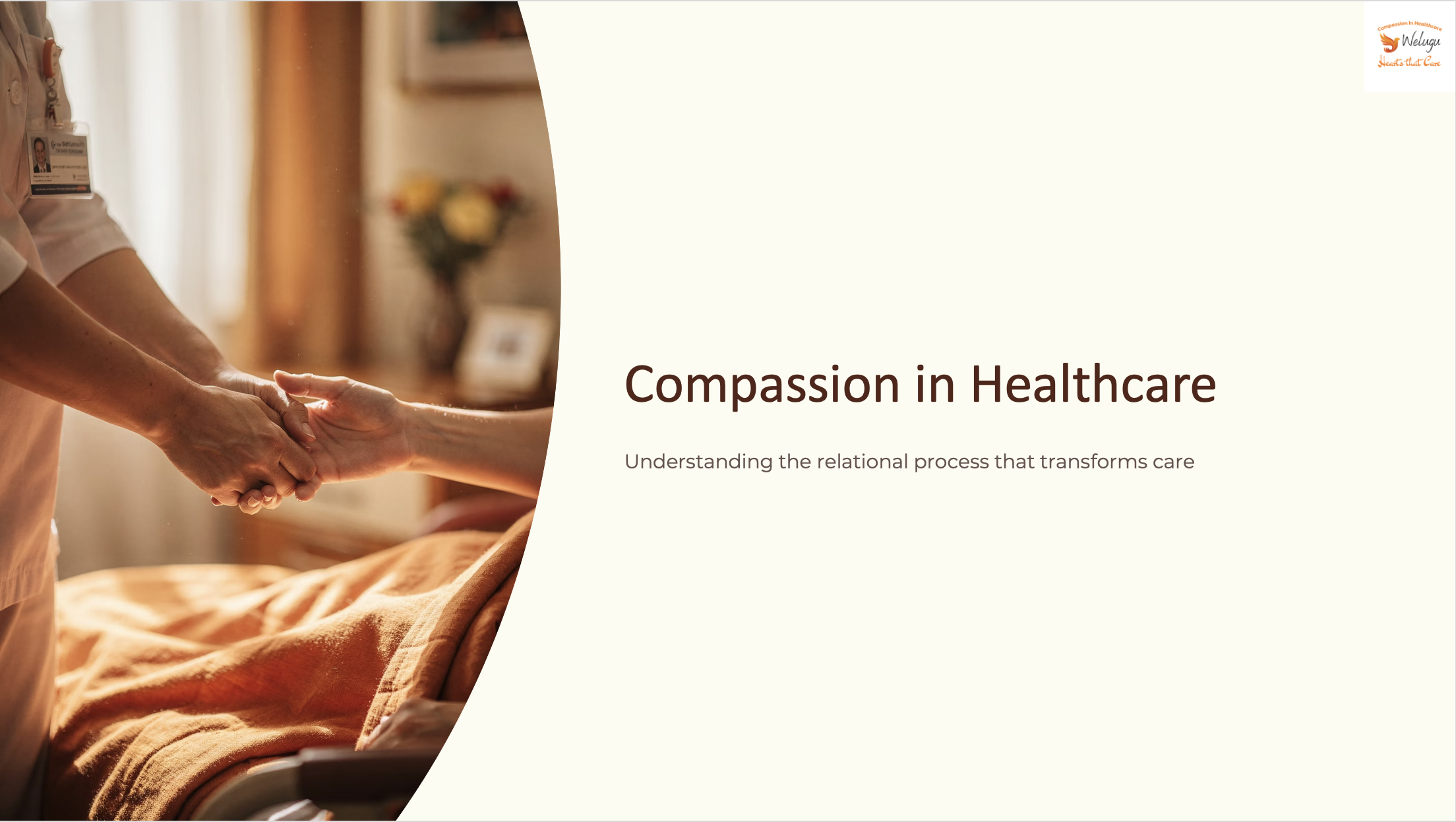
Lesson 1.1: Compassion in Healthcare
Overview:
This lesson introduces compassion in healthcare, explaining how it differs from kindness and empathy. Learners will explore how recognizing suffering, understanding patient context … -
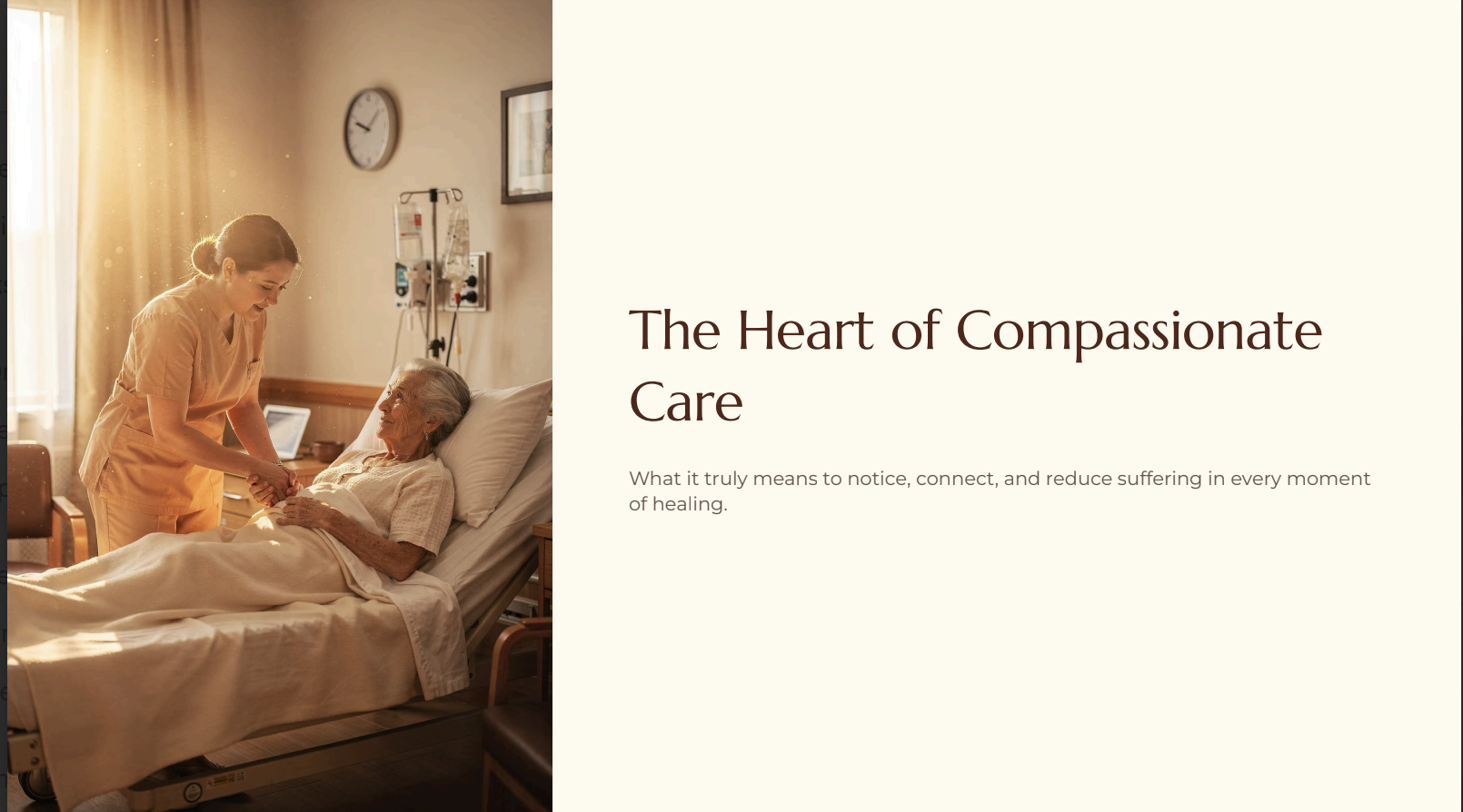
Lesson 1.2: Heart of Compassionate Care
Overview:
This lesson highlights how compassion in healthcare means noticing suffering, understanding patients’ context, and responding with presence and care. It shows that small, … -
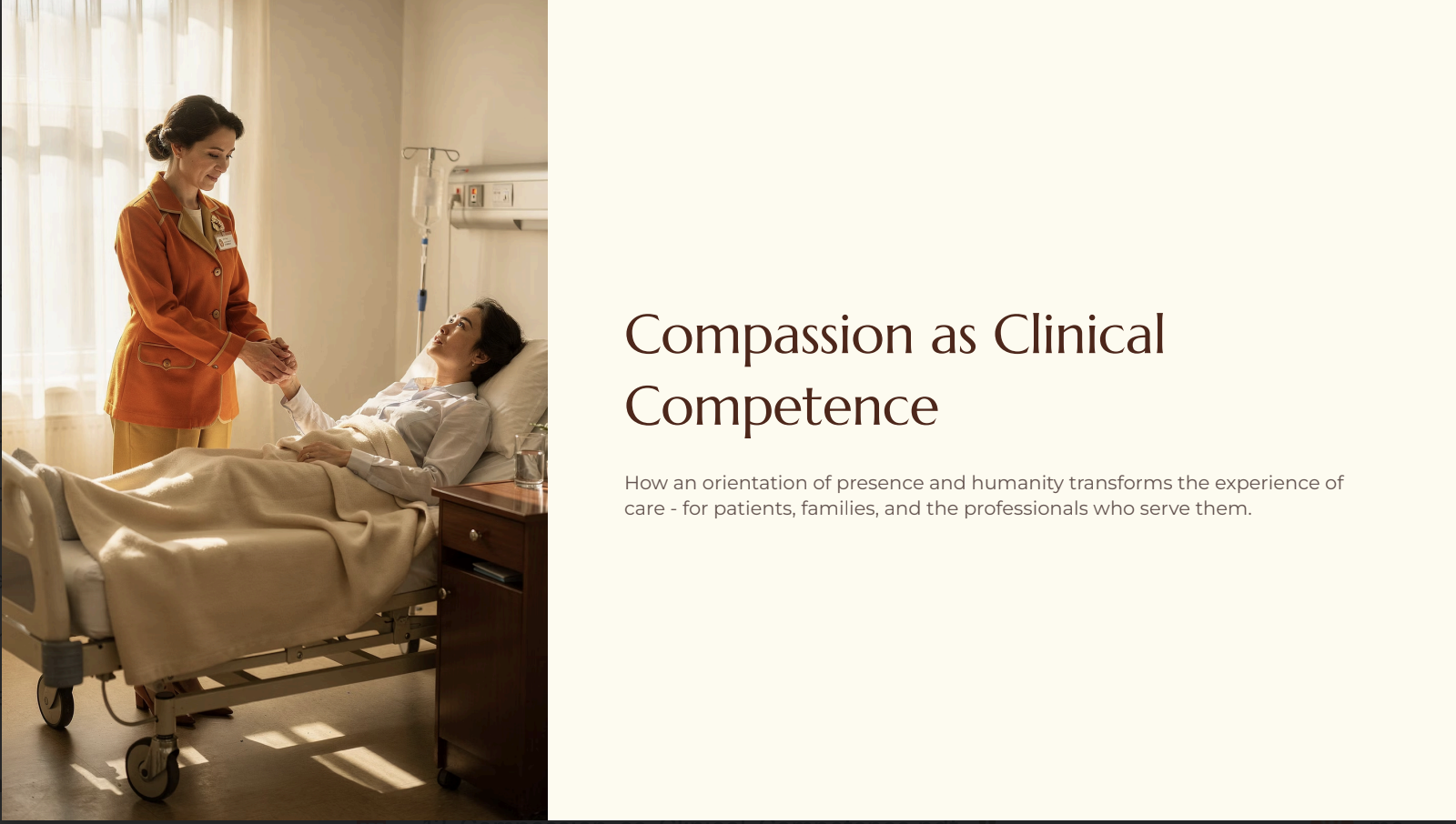
Lesson 1.3: Compassion as Clinical Competence
Overview:
This lesson explains that compassion complements clinical skill, shaping how care is delivered and experienced. Learners will see how a compassionate orientation of being present … -
Lesson 1.4: Compassion Vs Empathy
Overview:
Clarifies the distinction between empathy and compassion. Shows how empathy allows emotional understanding, while compassion adds intention and sustainable care … -
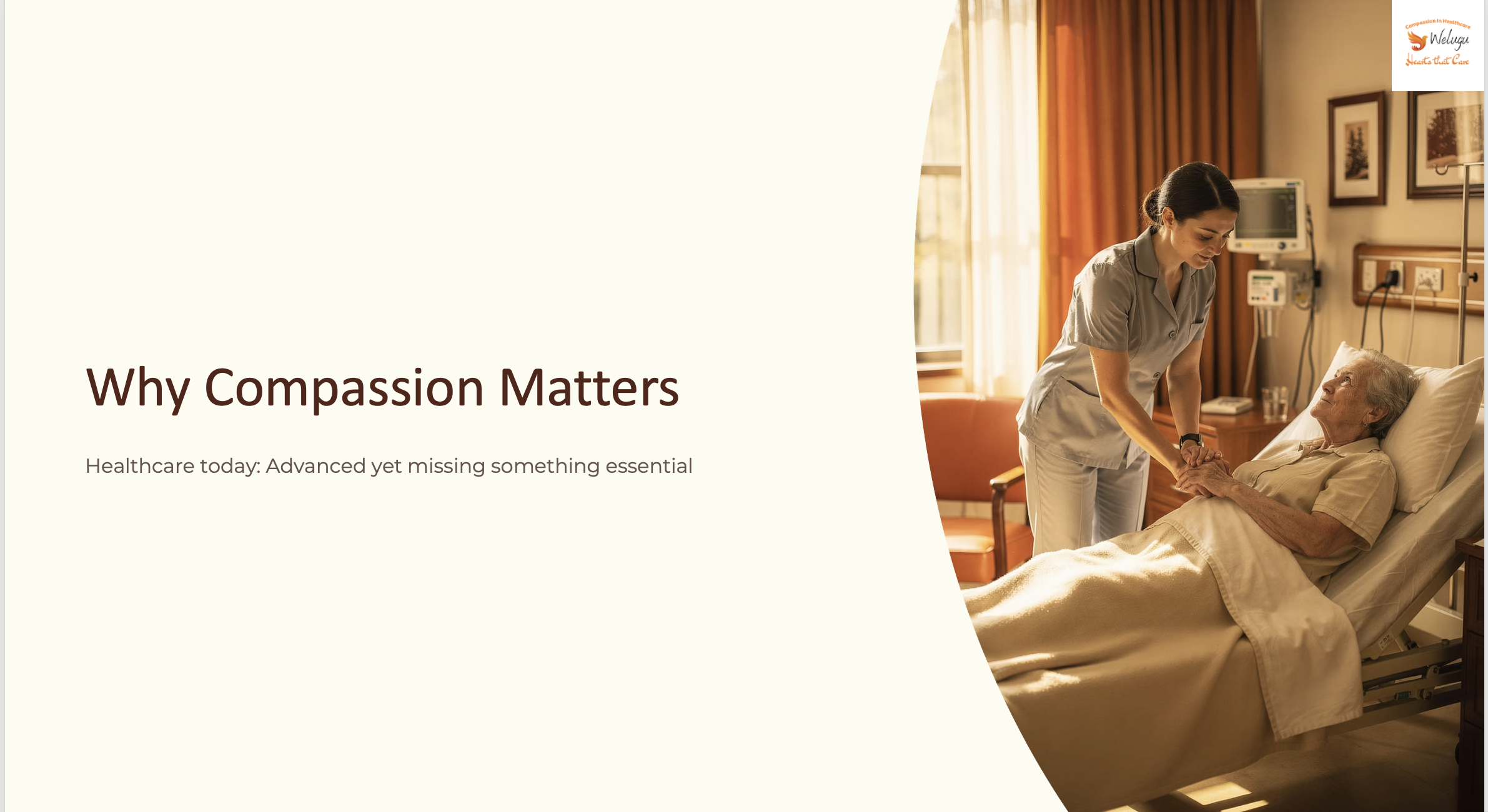
Lesson 1.5: Why Compassion Matters in Modern Healthcare Systems
Overview:
This lesson explores how modern healthcare, despite its remarkable advances, can sometimes feel disconnected … -
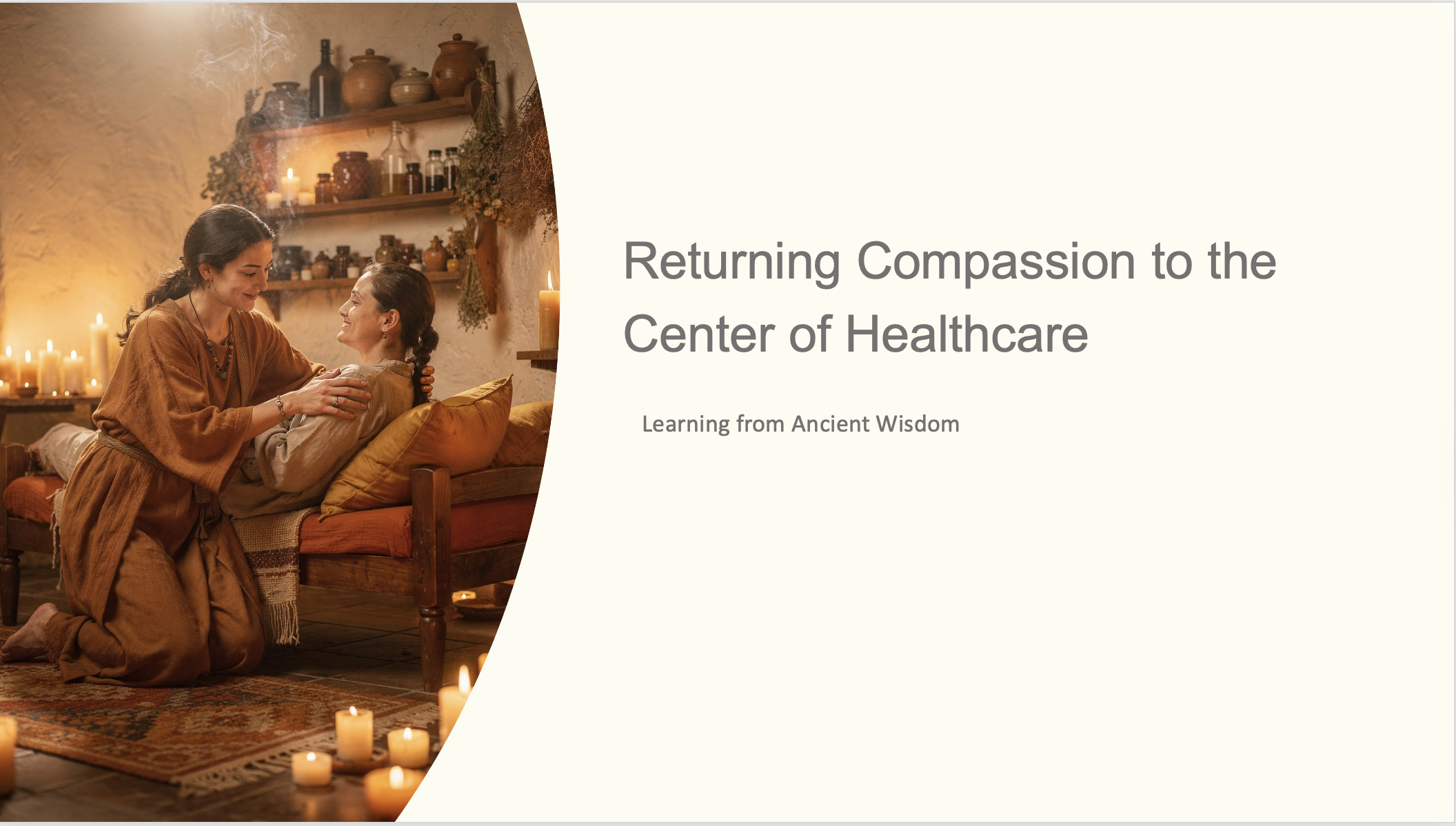
Lesson 1.6: Returning Compassion to the Center of Healthcare
Overview:
Explores historical healing traditions (Ayurveda, Yoga, and early medicine) and how modern healthcare narrowed its focus …
Module 2: Intention in Healthcare
-
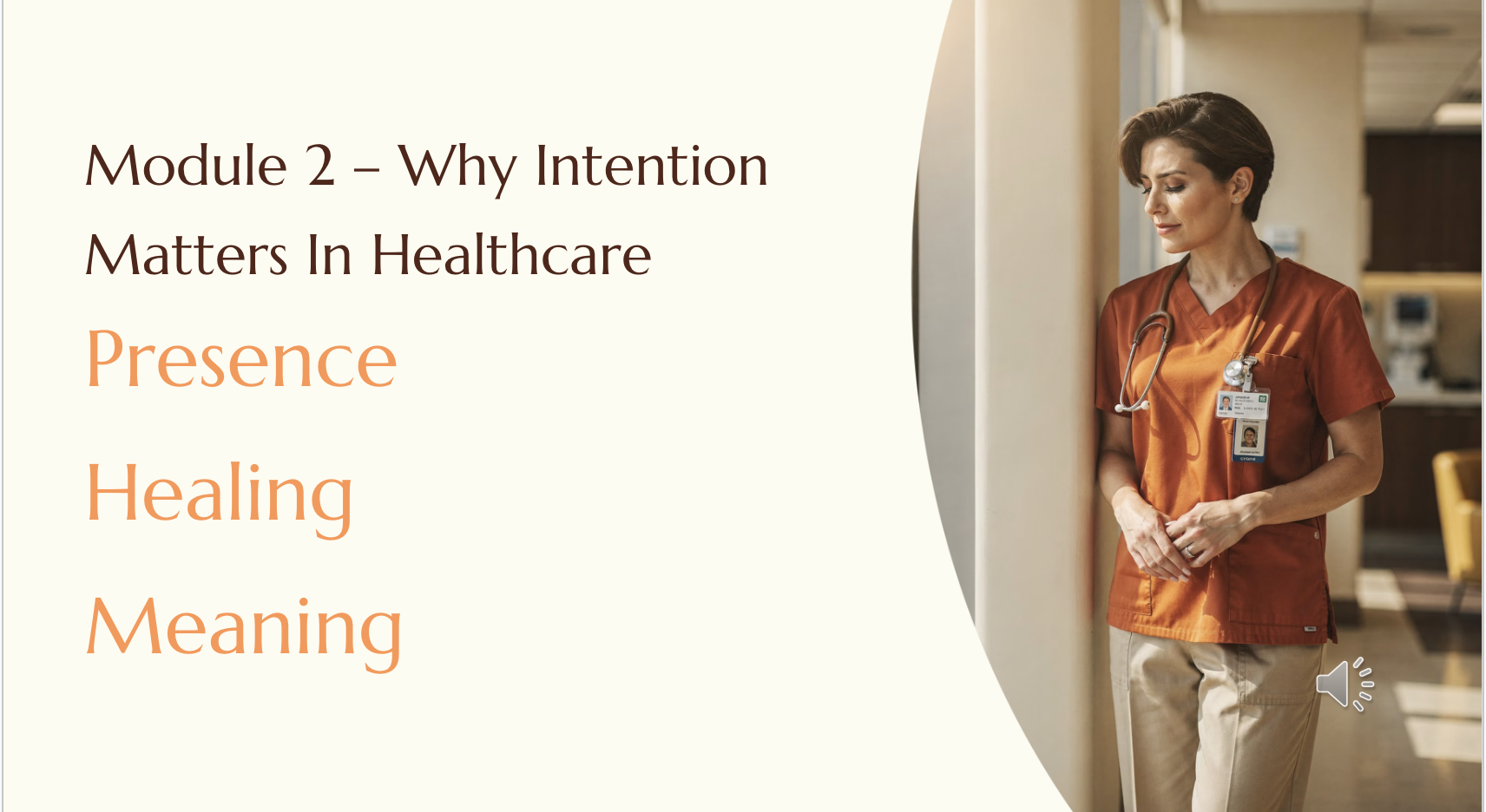
Lesson 2.1: Why Intention Matters in Healthcare
Overview:
This lesson invites reflection on the personal intention behind working in healthcare and how that intention may shift over time. By reconnecting with the reasons that first brought us… -
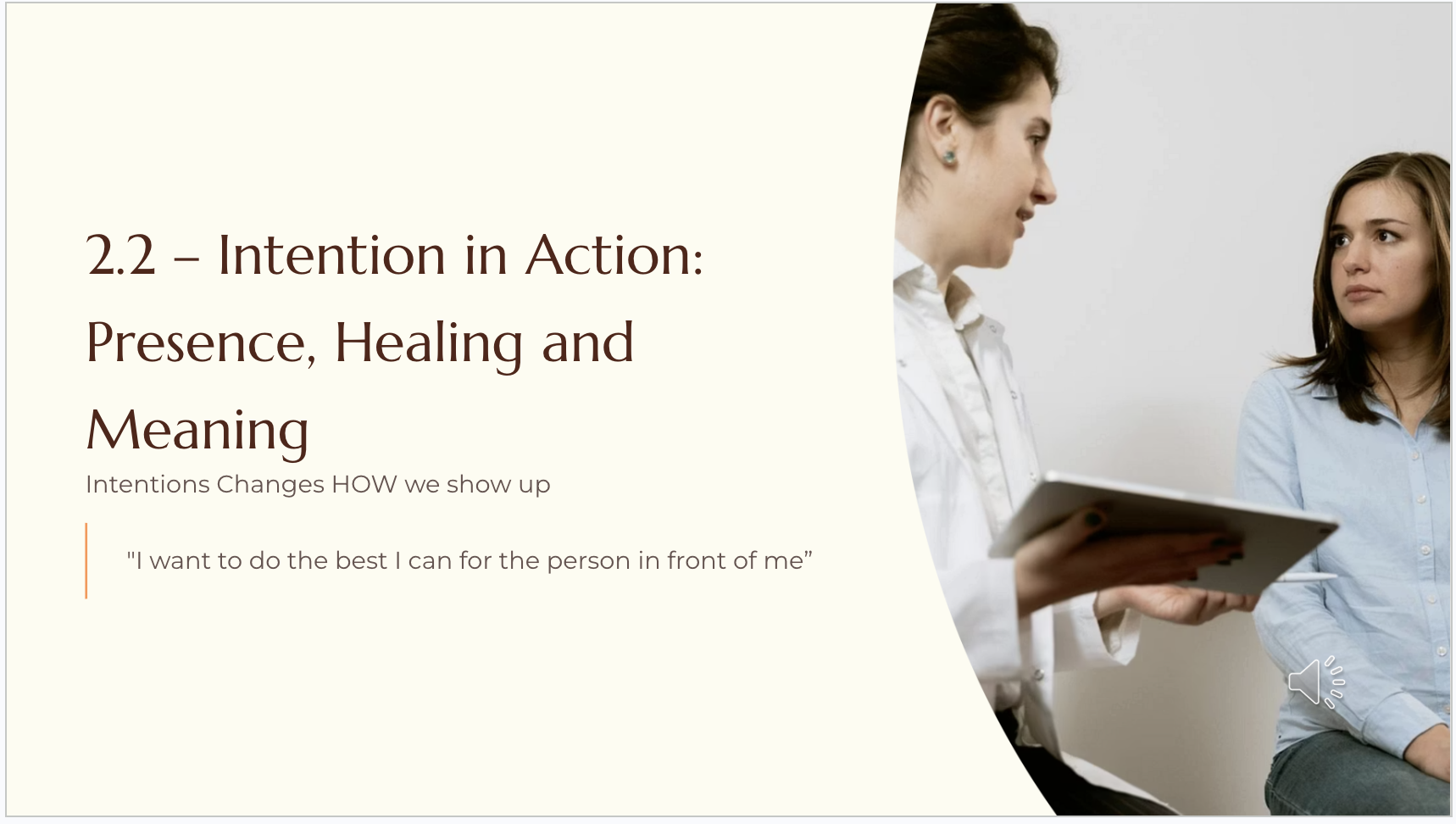
Lesson 2.2: Intention in Action
Overview:
This lesson explores how silently holding an intention to help can gently shape our tone, attention, and presence in everyday interactions. Intention does not add work, … -
Lesson 2.3: Simple Daily Intention Practice
Overview:
This lesson introduces a simple, practical way to set intention through brief pauses during the day. A single breath and a quiet, guiding thought can help orient attention, support presence, …
Module 3: Health • Healing • Healer
-
Lesson 3.1: What is Health?
Overview:
This lesson introduces a simple, practical way to set intention through brief pauses during the day. A single breath and a quiet, guiding thought can help orient attention, support presence, … -
Lesson 3.2: Healing vs Curing
Overview:
This lesson clarifies the difference between curing and healing, emphasizing that while curing removes disease, healing restores a sense of wholeness and support. Healing can occur … -
Lesson 3.3: How Healing Happens
Overview:
This lesson explores healing as the creation of conditions that support restoration and balance, both physically and beyond the body. While medicine treats disease, healing also involves … -
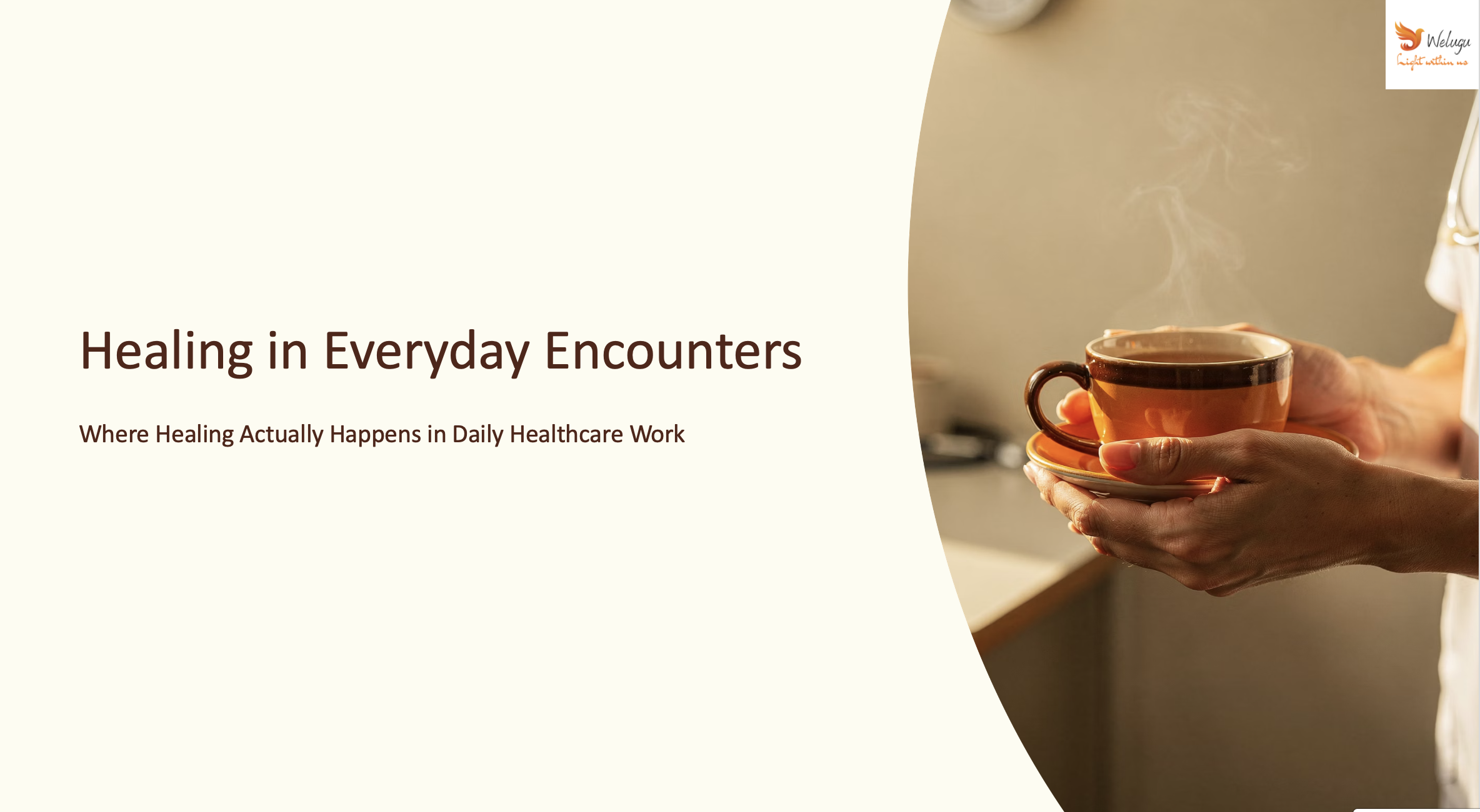
Lesson 3.4: Healing in Everyday Encounters
Overview:
This lesson explores healing as a relational process that unfolds through everyday encounters, not just through treatments or procedures. Small moments of presence, clear communication, … -
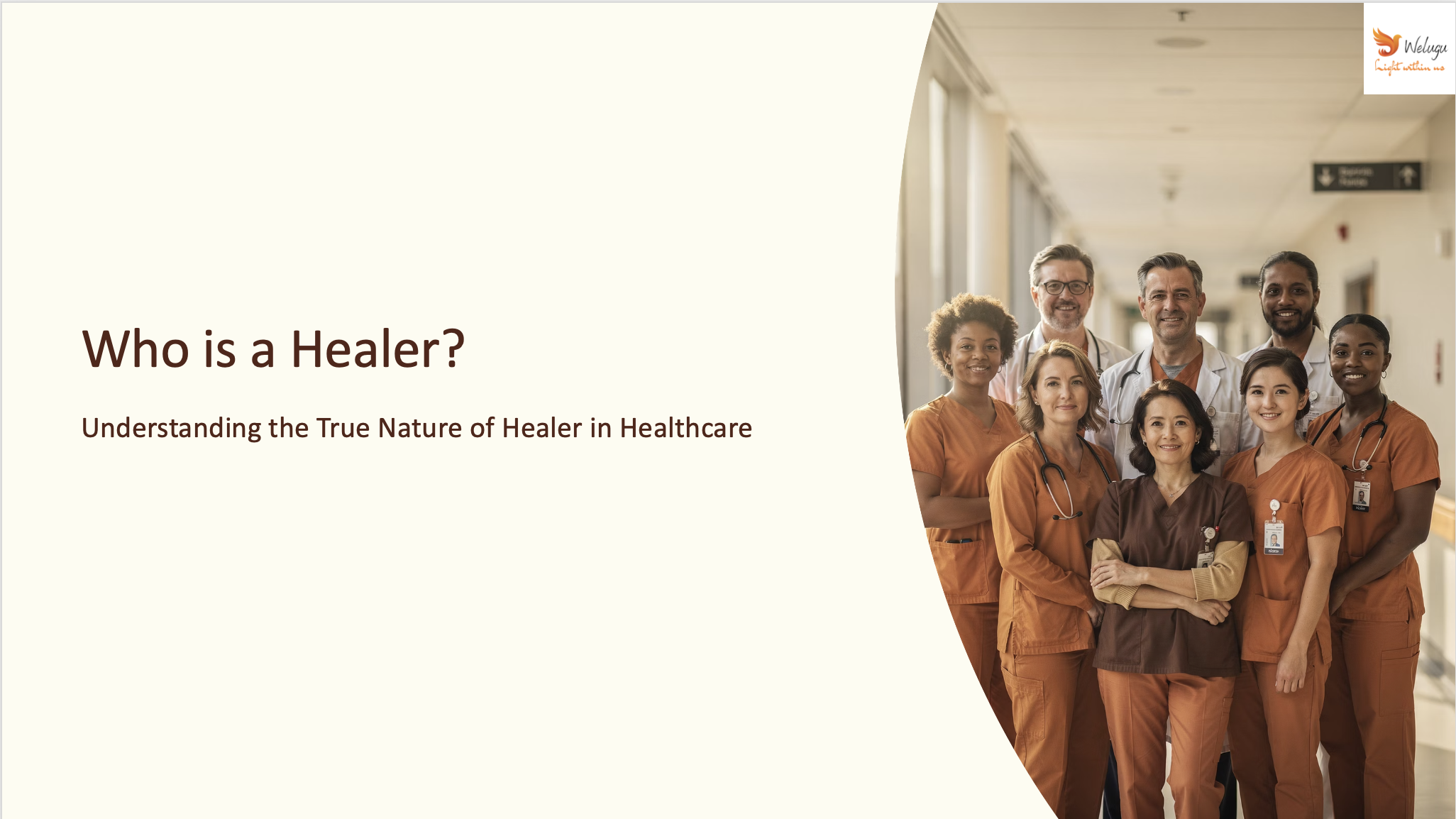
Lesson 3.5: Who Is a Healer?
Overview:
This lesson expands the idea of a healer beyond professional titles to include anyone who enters another person’s suffering with the intention to help. It highlights how healing happens … -
Lesson 3.6: Supporting Ourself as a Healer
Overview:
This lesson highlights how the healer’s inner state and well-being influence the quality of care and the conditions for healing. It emphasizes that everyone in healthcare, … -
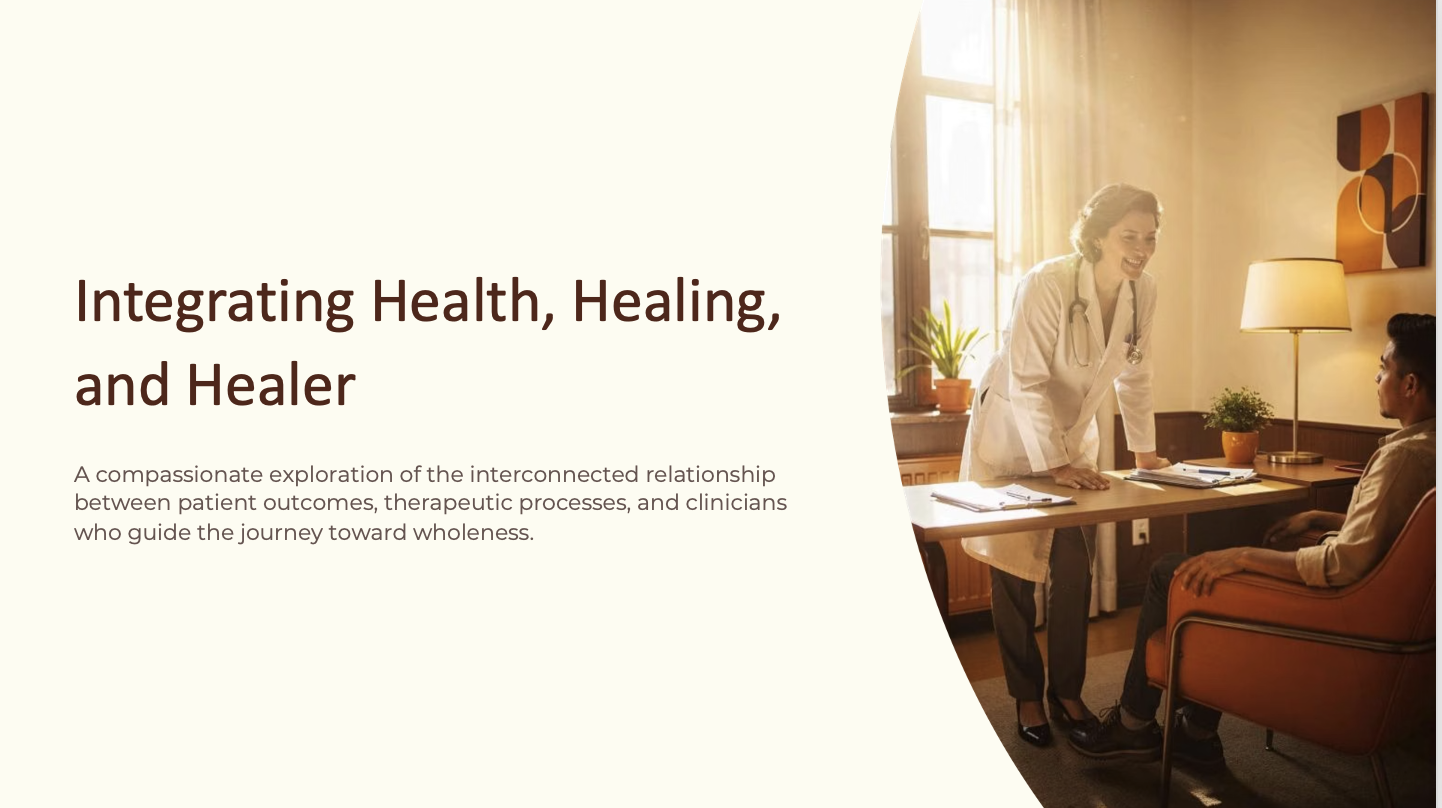
Lesson 3.7: Integration: The Heart of Compassionate Care
Overview:
This lesson brings together the connection between health, healing, and the role of the healer. It emphasizes that healing is a …
Module 4: Awareness as a Clinical Skill
-
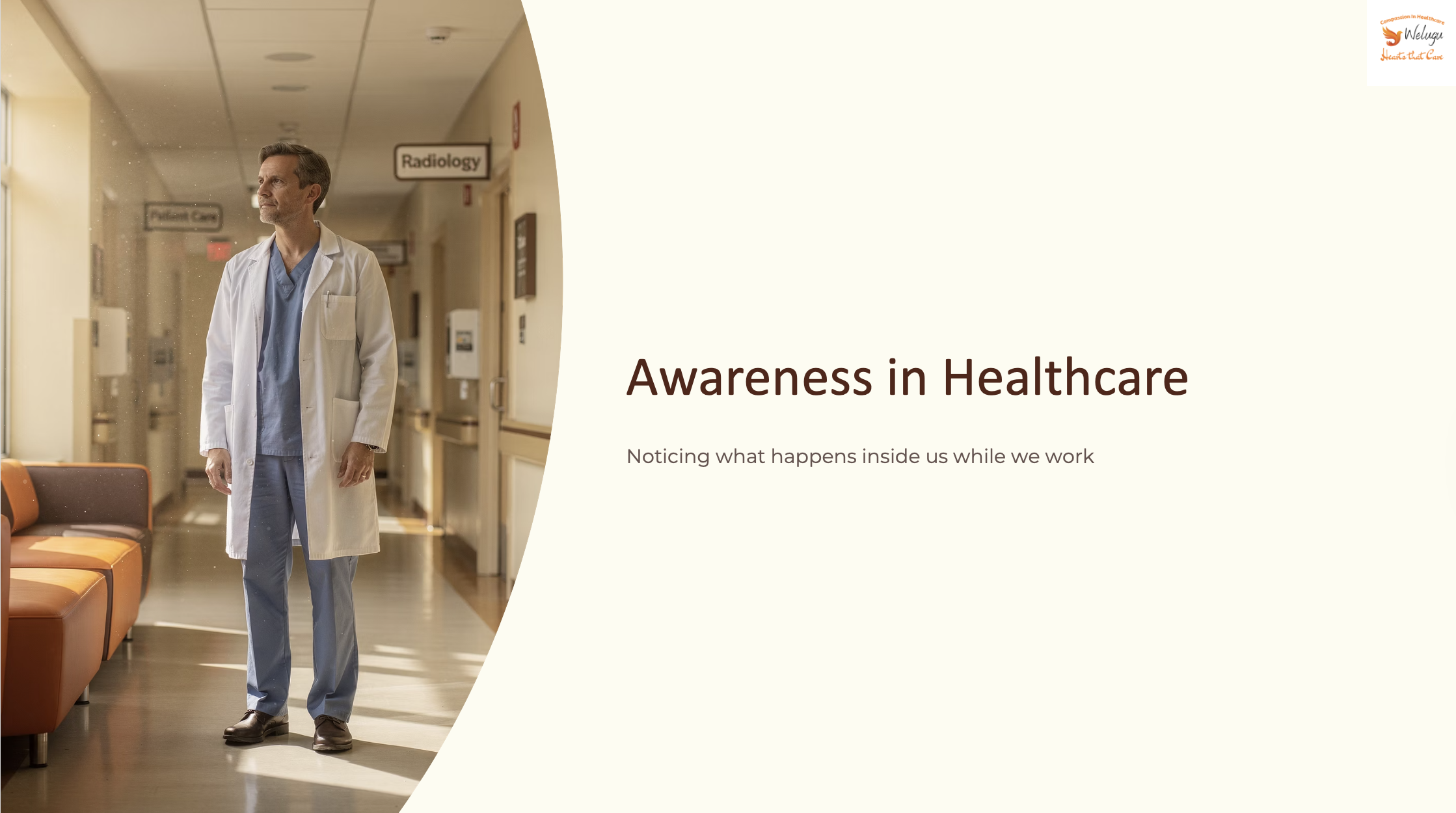
Lesson 4.1: Awareness in Healthcare
Overview:
This lesson introduces awareness as a practical clinical skill rooted in simple noticing rather than analysis or control. By recognizing our thoughts, emotions, and physical tension during routine work, … -
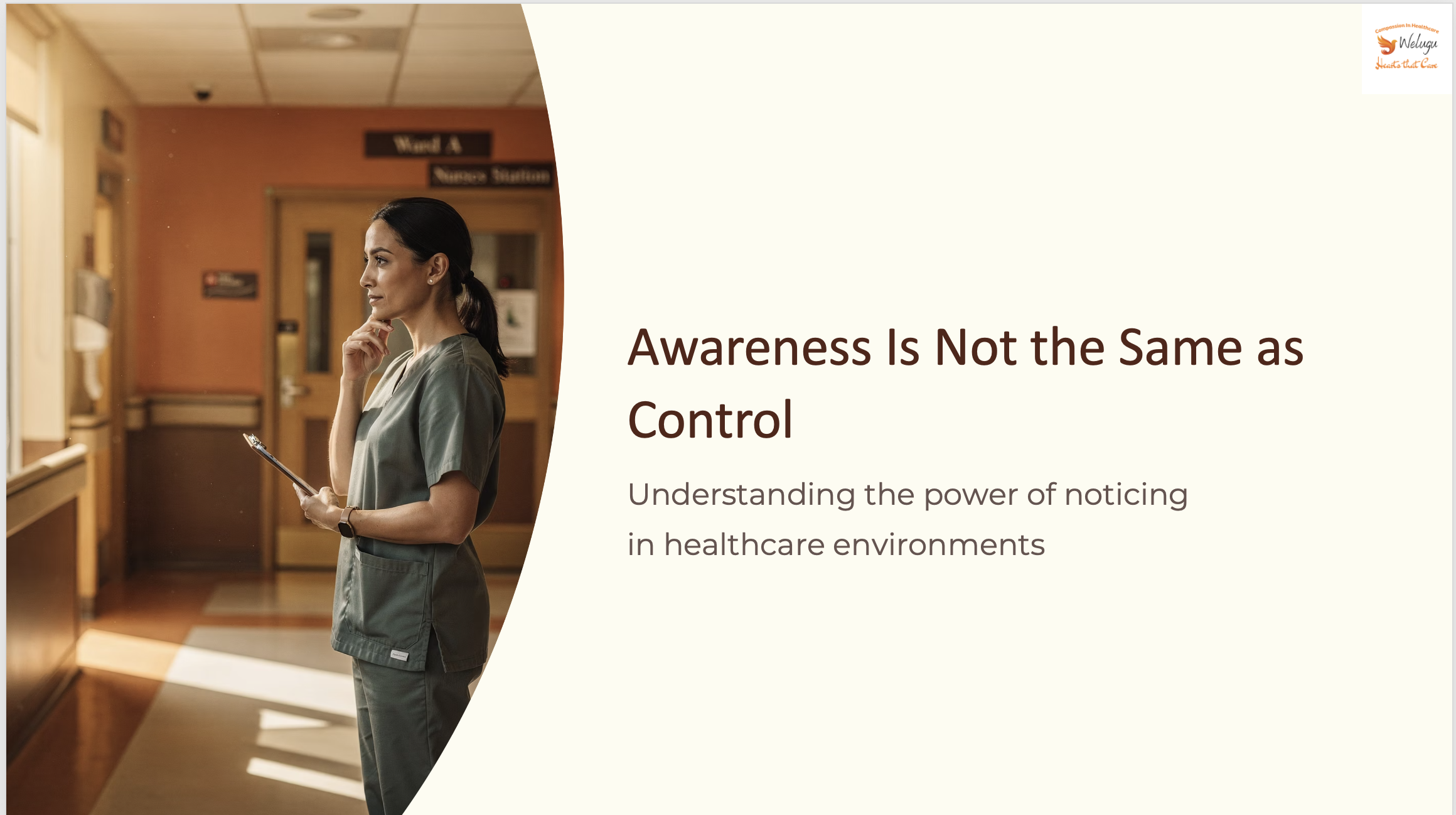
Lesson 4.2: Awareness Is Not the Same as Control
Overview:
This lesson clarifies that awareness does not require control or fixing emotions; it simply begins with noticing. By recognizing thoughts and feelings as they arise, we create a small space… -
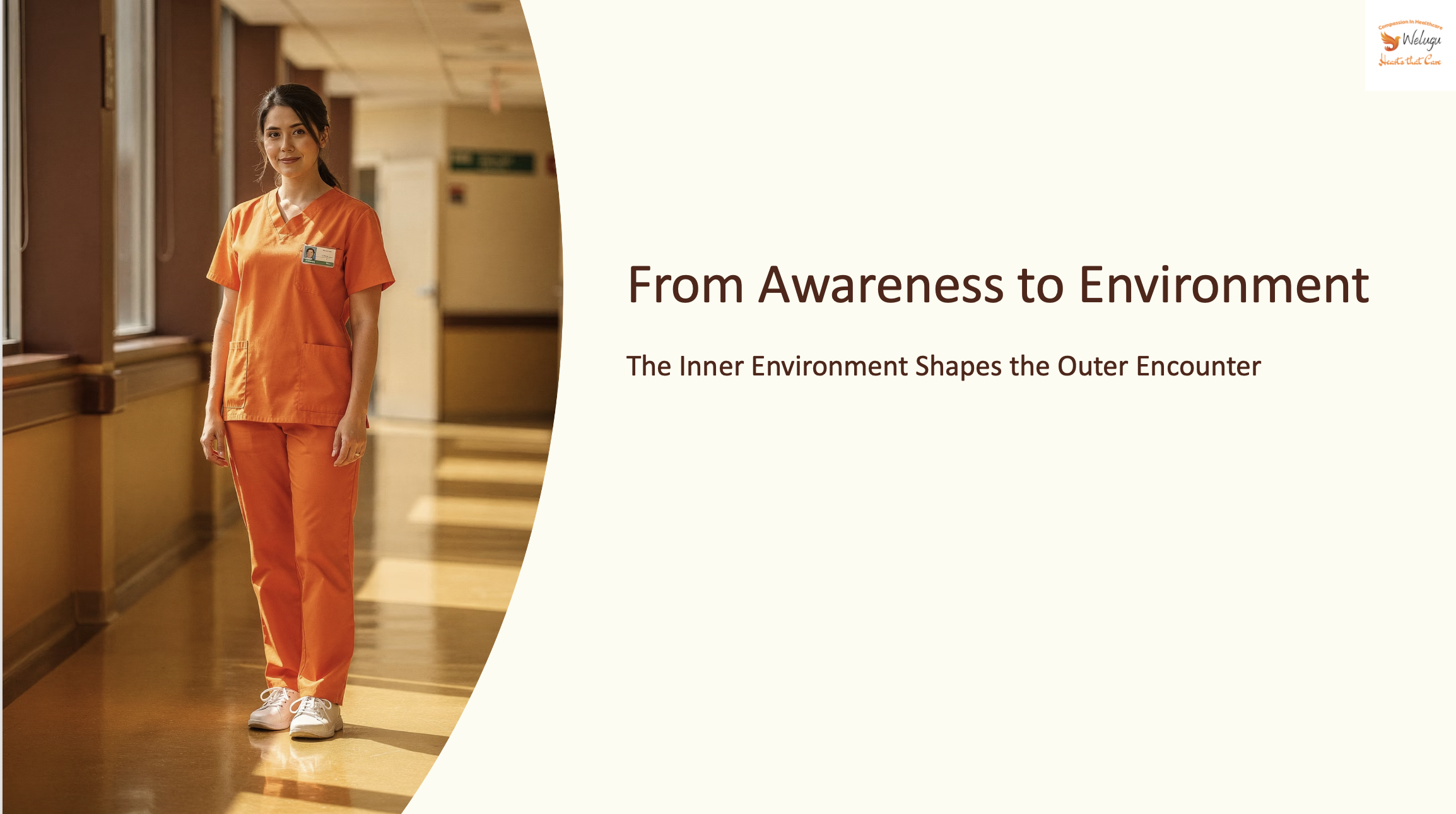
Lesson 4.3: From Awareness to Environment
Overview:
This lesson explores how every healthcare encounter is shaped by both the external environment and our internal state. When we notice our thoughts, emotions, and physical tension, … -
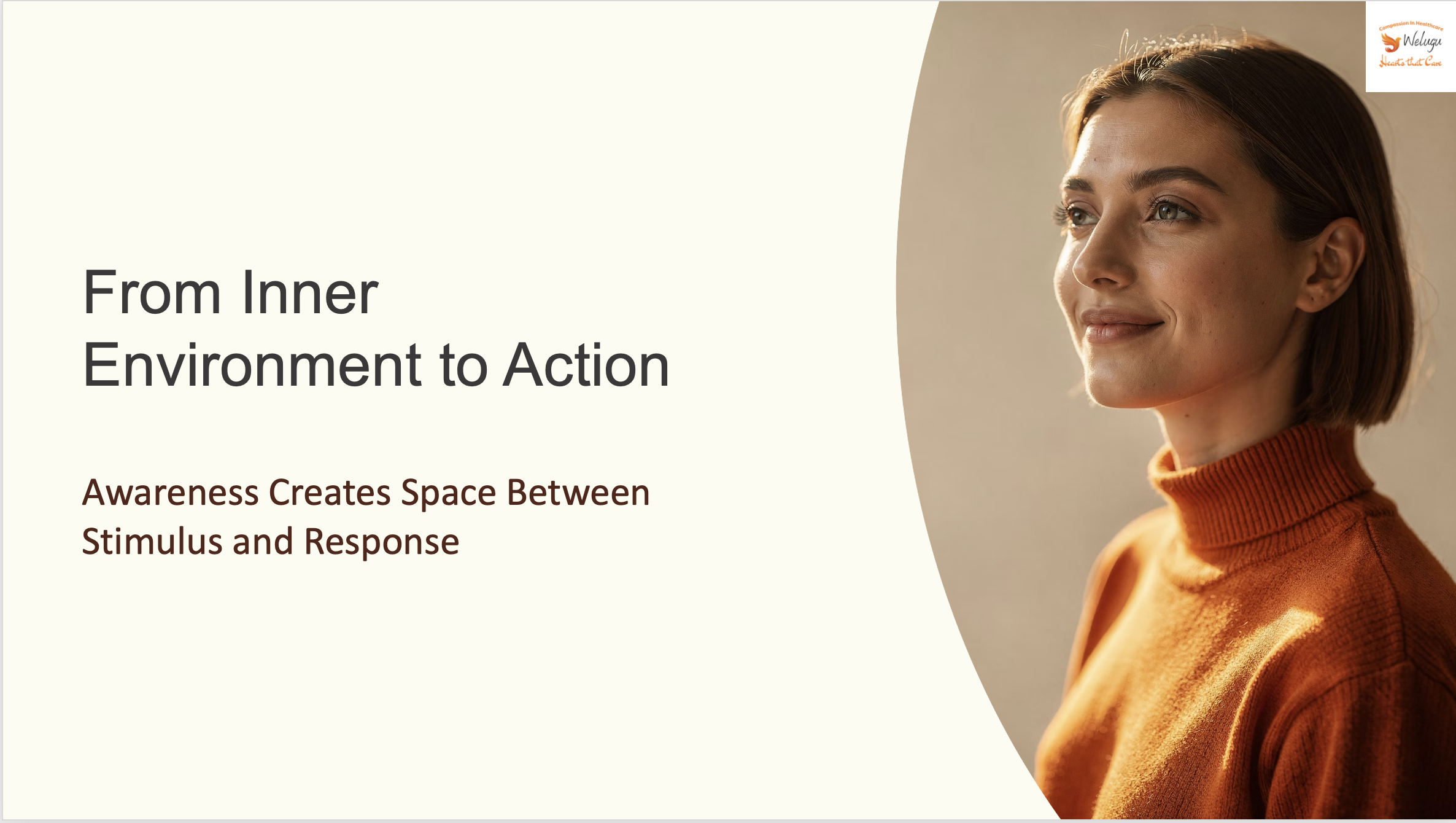
Lesson 4.4: From Inner Environment to Action
Overview:
This lesson explores how awareness creates a brief but powerful space between stimulus and response. Even a second of noticing can help us choose our tone, words, and actions more … -
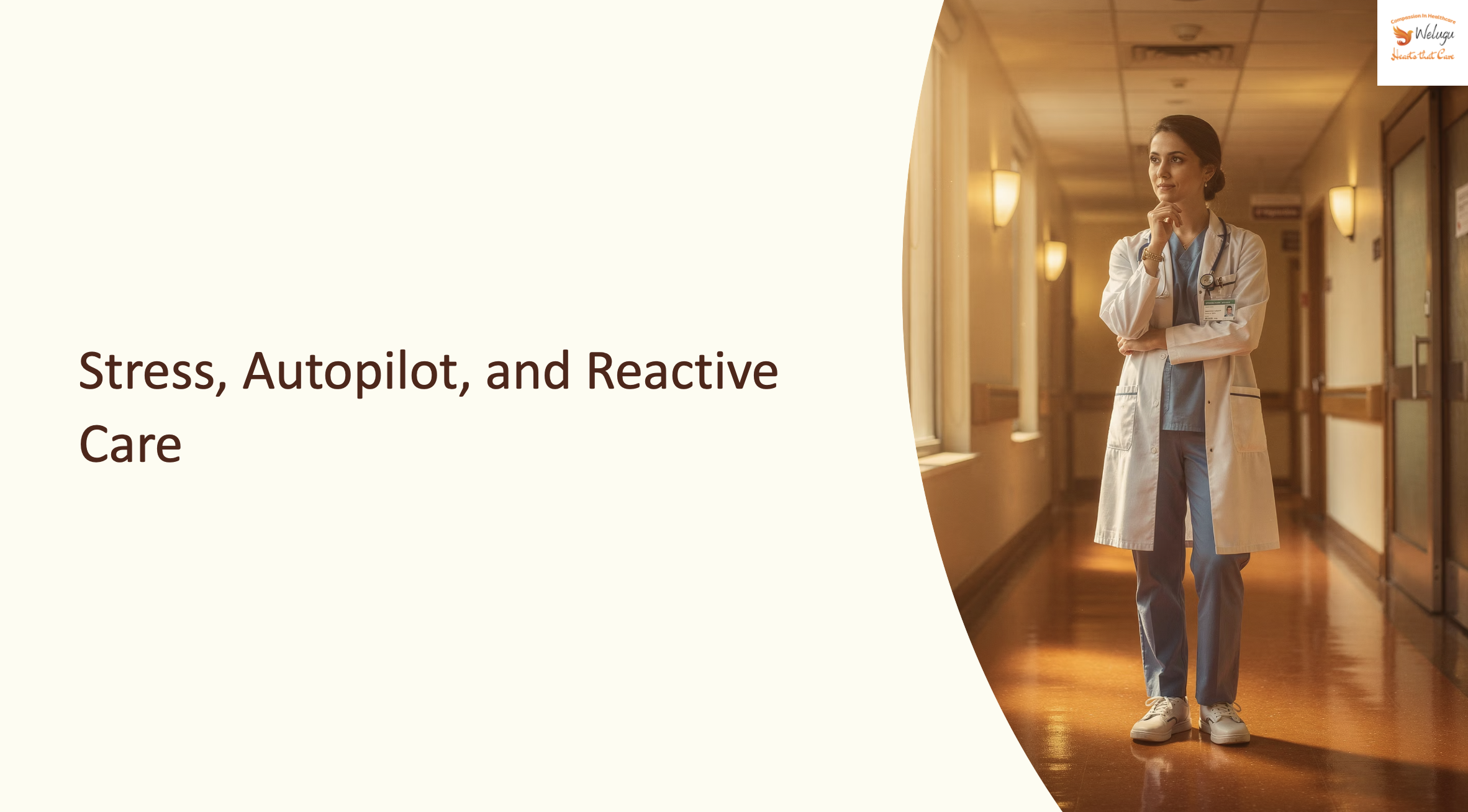
Lesson 4.5: Stress, Autopilot, and Reactive Care
Overview:
This lesson explains how stress naturally pushes the brain into autopilot, where speed increases but attention, patience, and nuance can decrease. In busy healthcare environments, … -
Lesson 4.6: Awareness as the Foundation for Compassion
Overview:
This lesson presents awareness as the foundation of compassionate care. By noticing our internal state, we create space for more …
Module 5: Bias as a Human Pattern
-
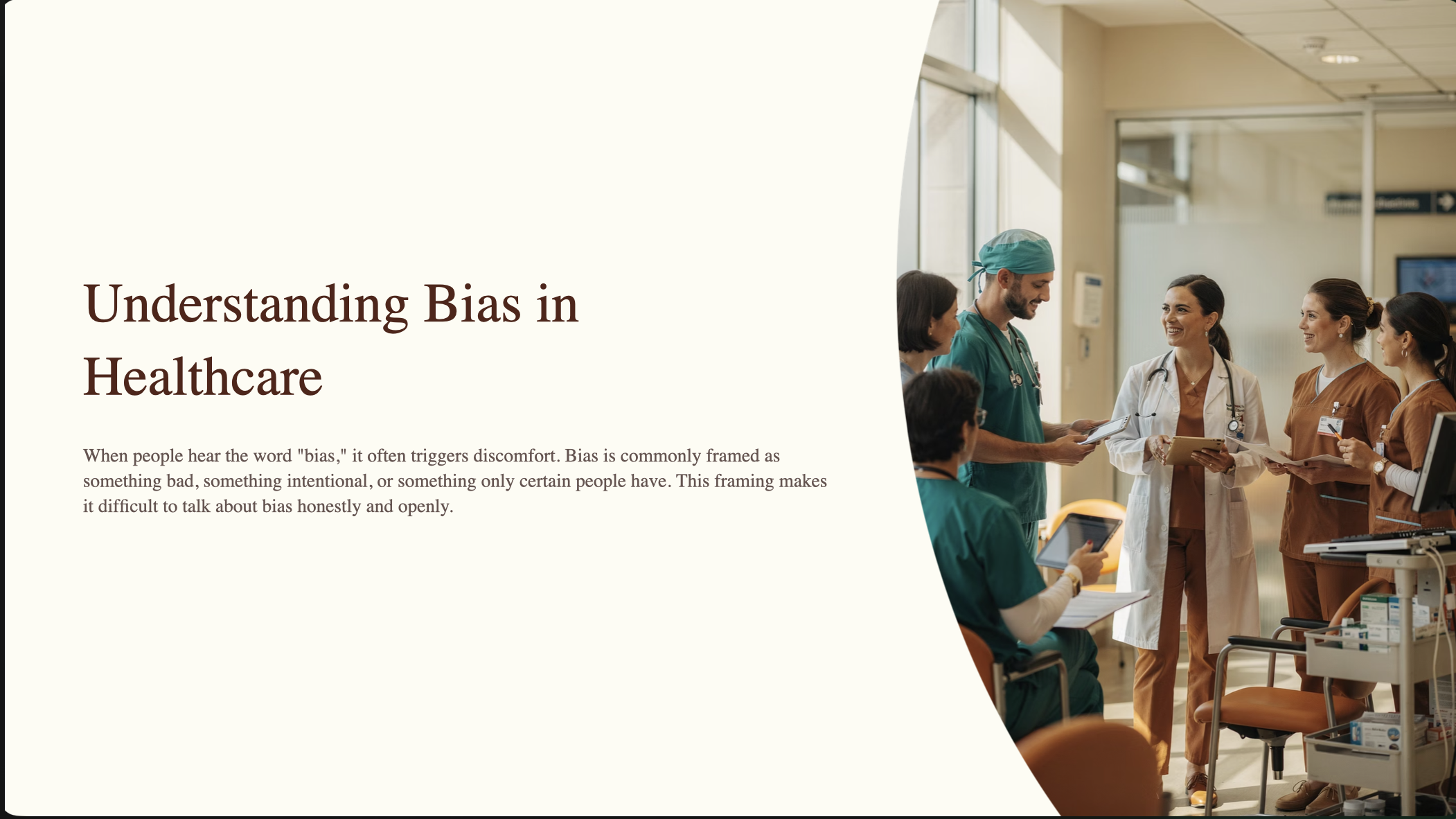
Lesson 5.1: Understanding-Bias-in Healthcare
Overview:
This lesson introduces bias as a normal human cognitive process rather than a personal flaw. Learners will explore how unconscious mental shortcuts shape perception and decision-making … -
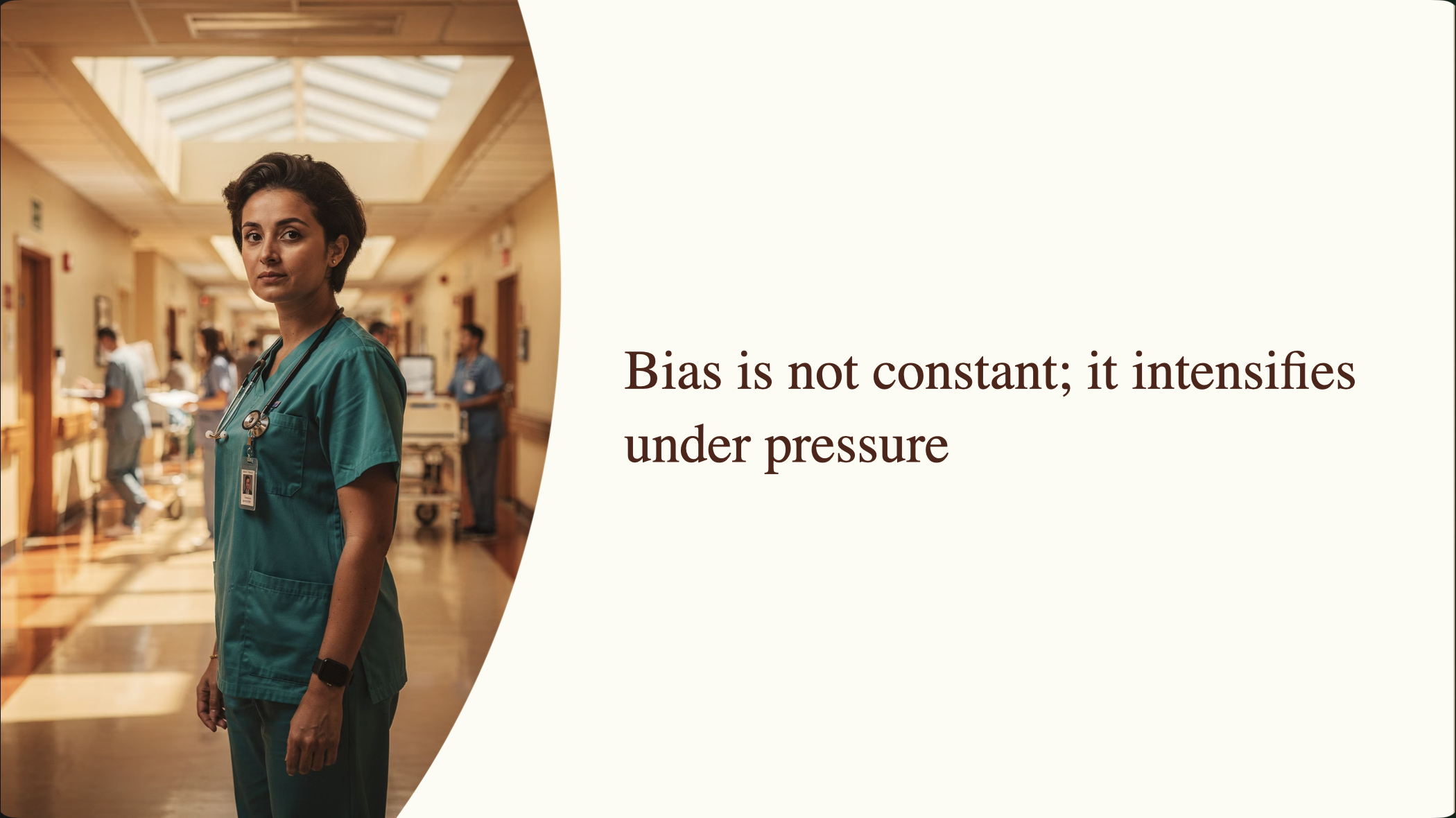
Lesson 5.2: Bias-is-not-constant. It intensifies under pressure
Overview
This lesson explores how bias intensifies under pressure in healthcare environments. Learners will understand … -

Lesson 5.3: Labels-as-Mental-Shortcuts
Overview
This lesson examines how labels function as mental shortcuts that influence perception and interaction in healthcare. Learners will explore how labeling can limit curiosity and understanding, … -
Lesson 5.4: When-Bias-Becomes-Invisible
Overview
This lesson reframes bias as a human cognitive pattern rather than a sign of bad intent. Learners will explore how recognizing bias without blame reduces defensiveness and creates space … -
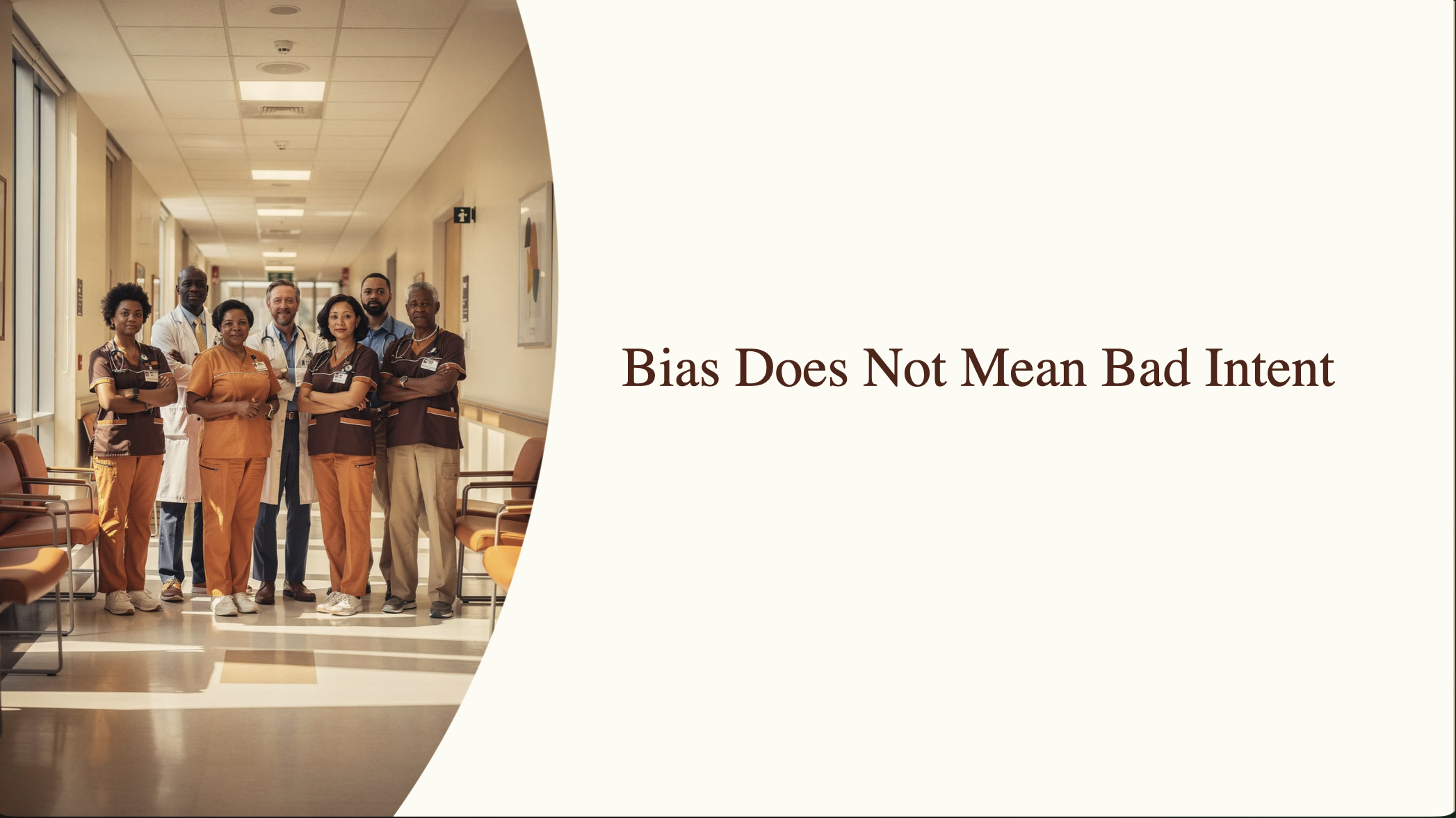
Lesson 5.5: Bias-Does-Not-Mean-Bad Intent
Overview:
Explores historical healing traditions (Ayurveda, Yoga, and early medicine) and how modern healthcare narrowed its focus toward disease treatment. Reintroduces compassion as a lost … -
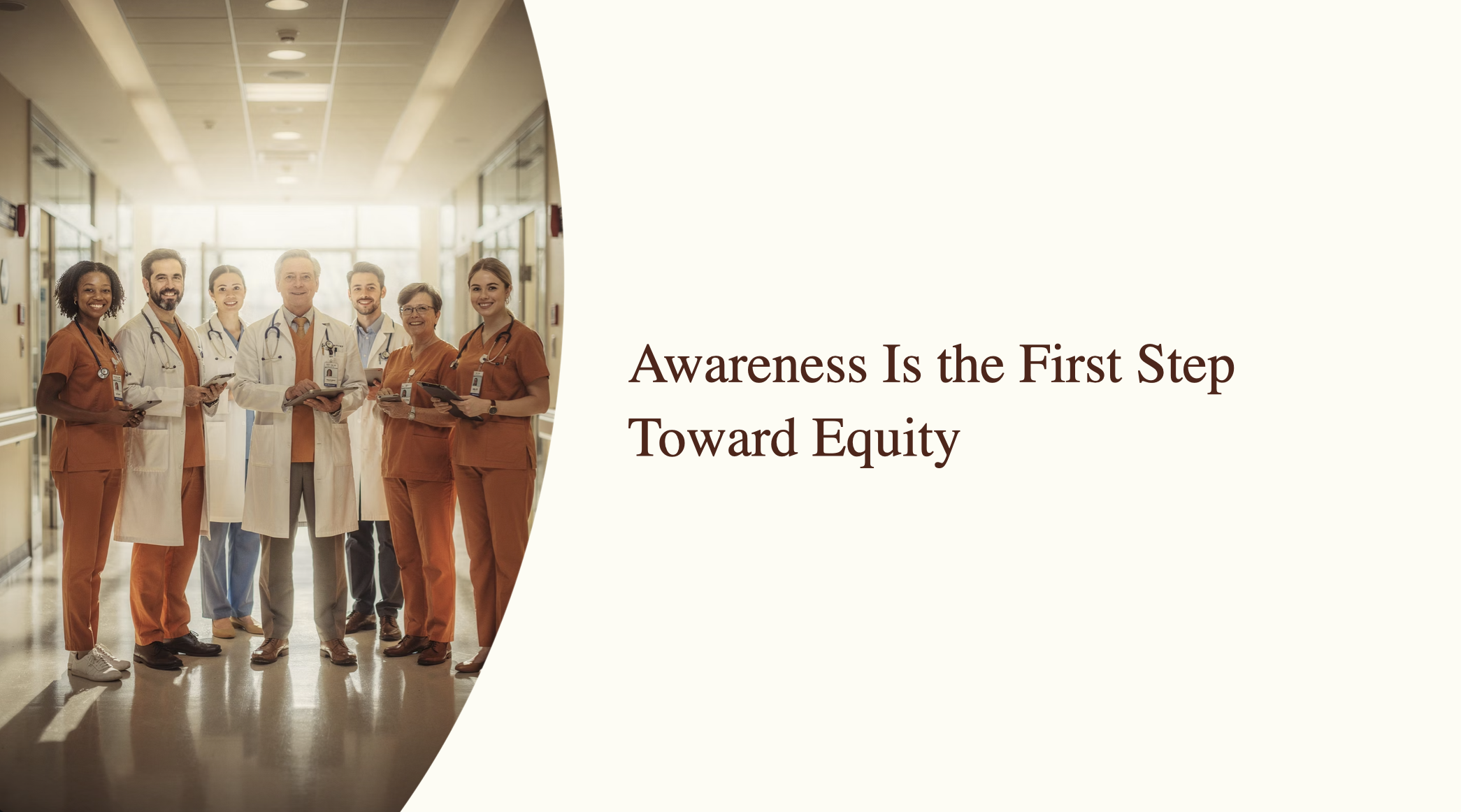
Lesson 5.6: Awareness Is the First Step Towards Equity
Overview
This lesson emphasizes that awareness is the first step toward equitable care. Learners will practice noticing biases, …
Module 6: From Intention to Presence
-
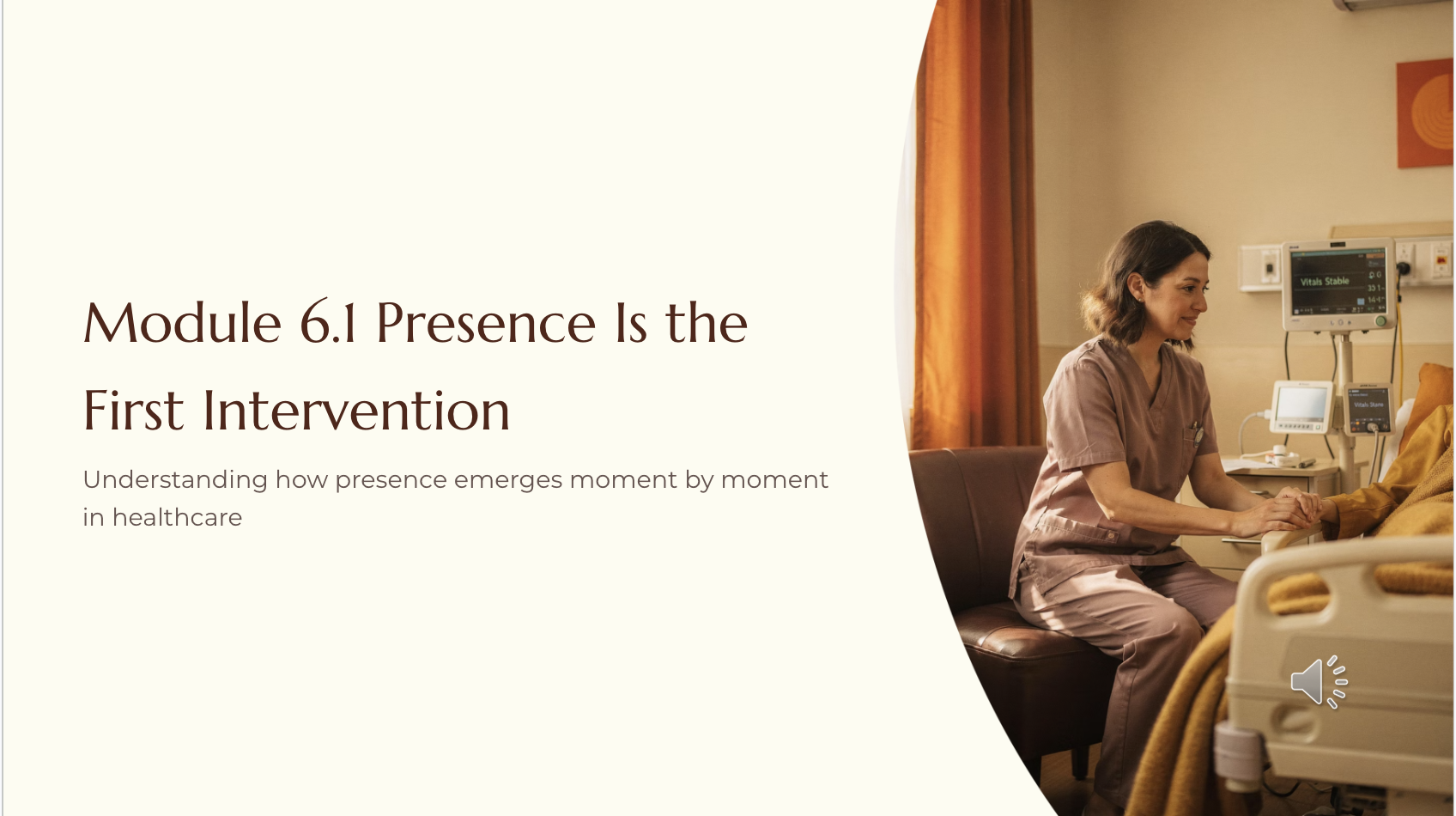
Lesson 6.1: Presence Is the First Intervention
Overview:
This lesson introduces presence as one of the earliest and most powerful interventions in healthcare. The quality of attention we bring into an encounter is often sensed immediately … -
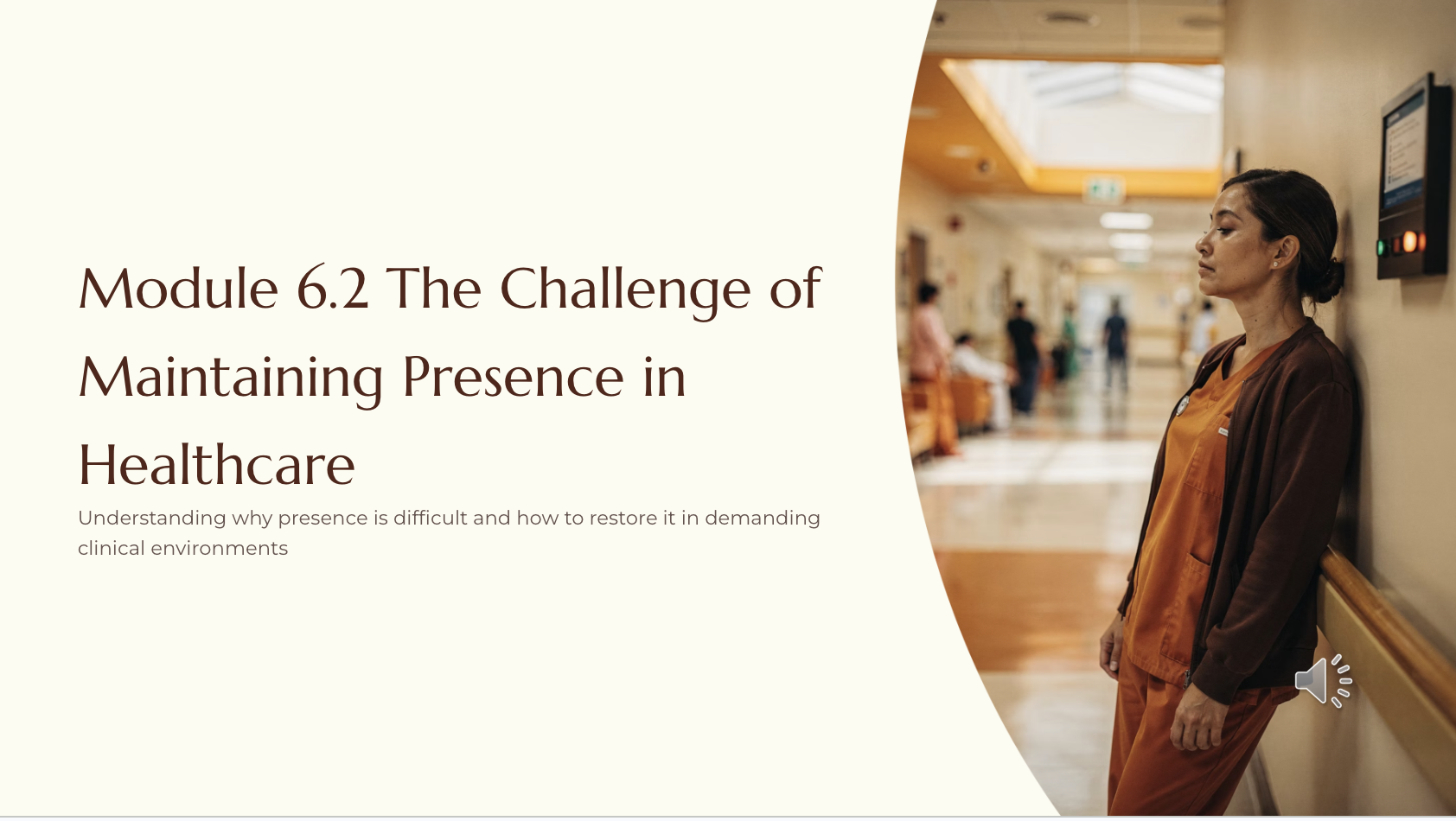
Lesson 6.2: The Challenge of Maintaining Presence in Healthcare
Overview:
This lesson explores why sustaining presence can be difficult in fast-paced healthcare environments where attention is constantly … -
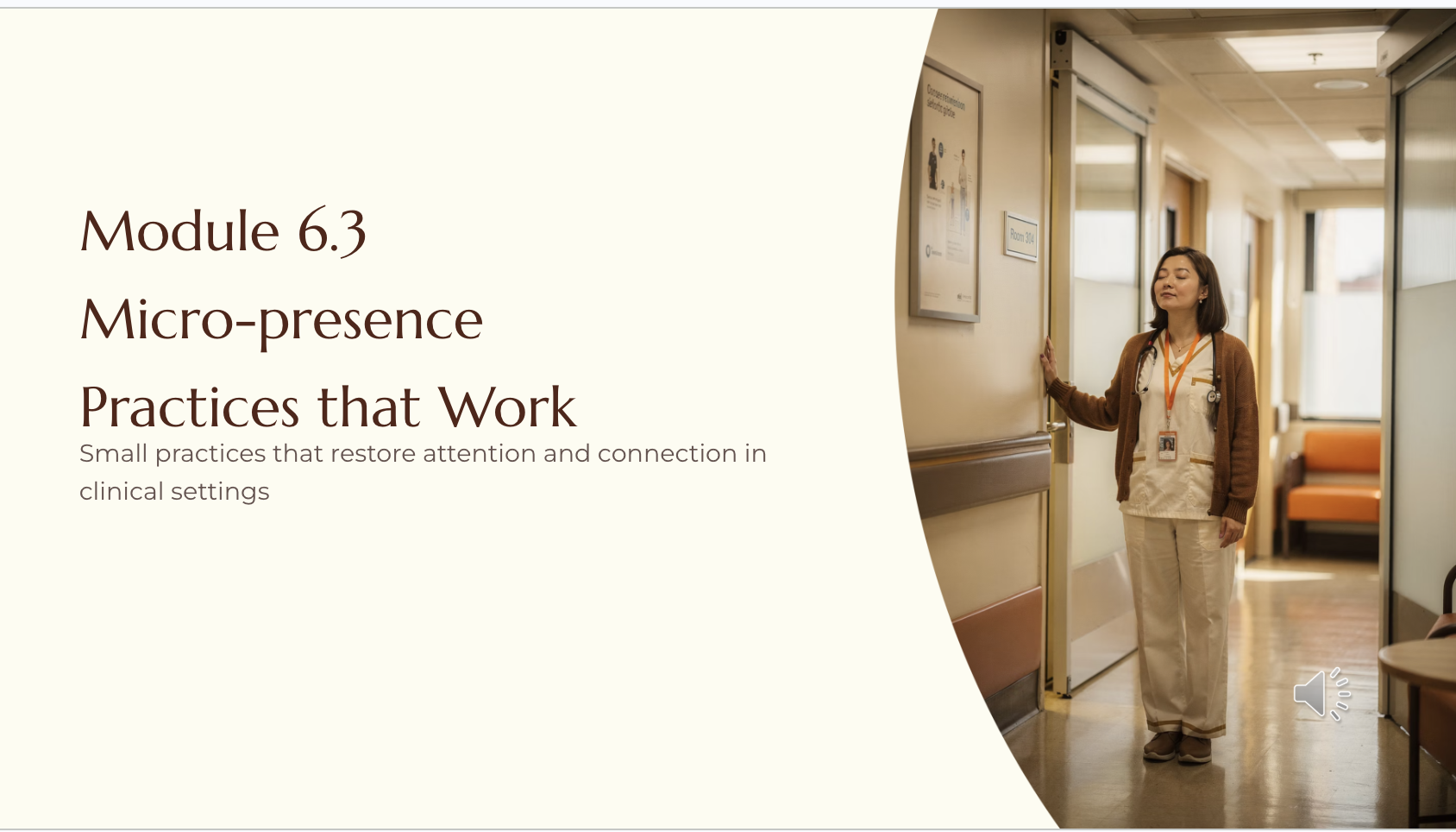
Lesson 6.3: Micro-Presence Practices That Work
Overview:
This lesson shows how presence can be restored through small, simple actions even in busy clinical settings. Brief pauses, a conscious breath, eye contact, or a clear acknowledgment …
Module 7: Seeing the Person Beyond the Diagnosis
-
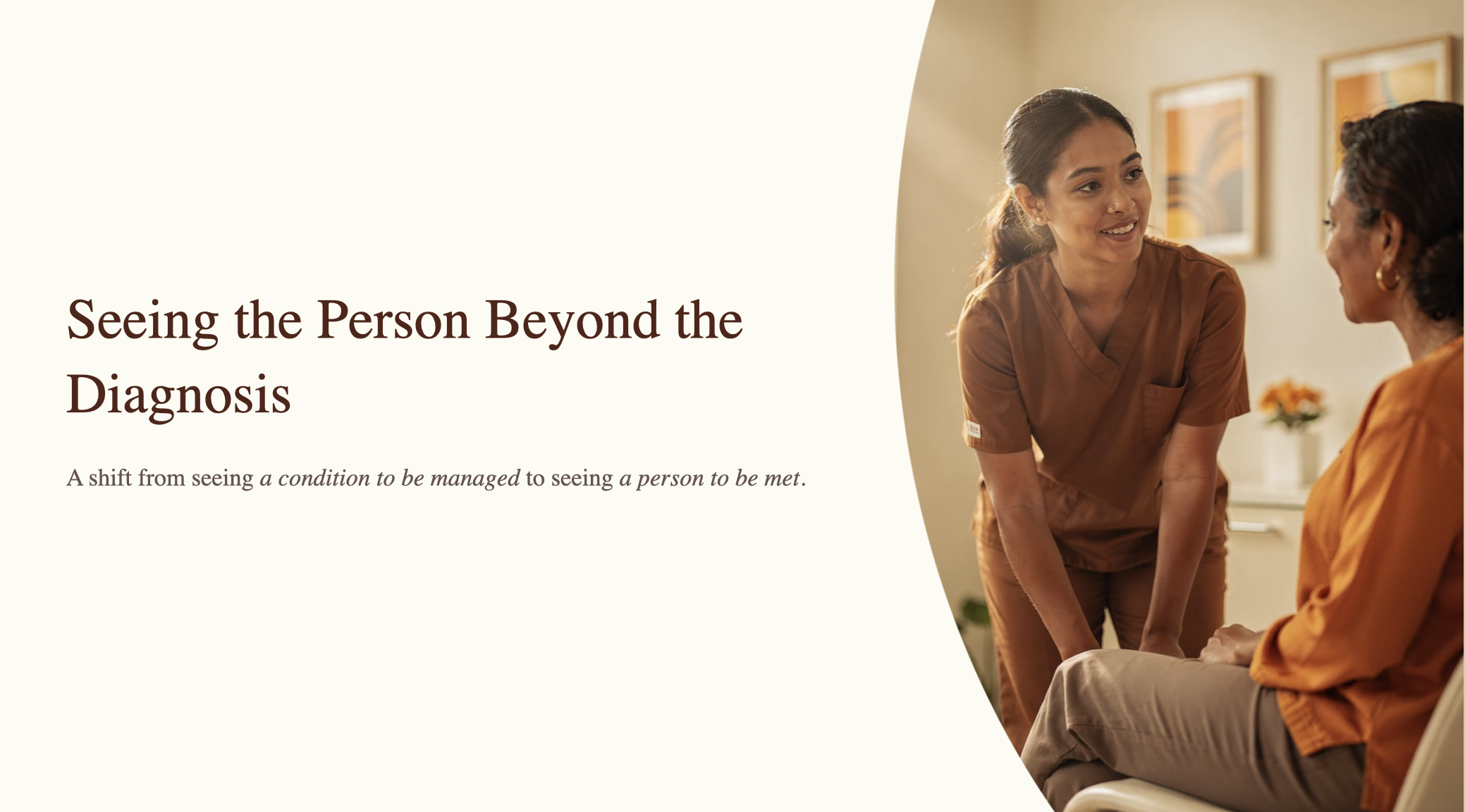
Lesson 7.1: Seeing The Person Beyond the Diagnosis
Overview:
This lesson emphasizes that while diagnosis is essential for guiding treatment, it does not define the person experiencing the illness. When diagnosis becomes identity, care can narrow … -

Lesson 7.2: What We Miss When We Lead With Labels
Overview:
This lesson explores how labels can quietly shape expectations and influence how we listen, explain, and respond. By looking … -
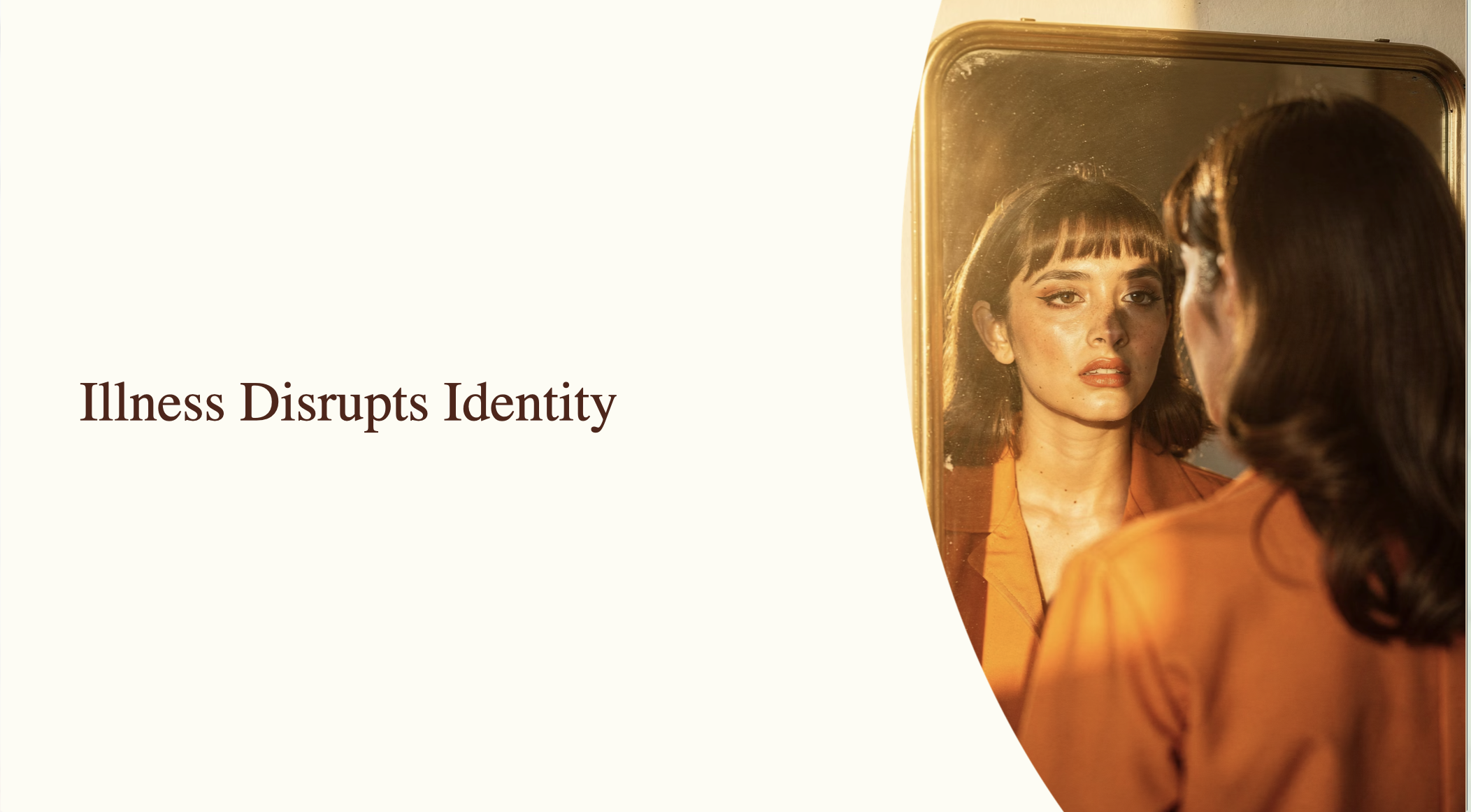
Lesson 7.3: Illness Disrupts Identity
Overview:
This lesson explores how illness affects not only the body, but also identity, roles, and independence. By recognizing the emotional disruption that often accompanies illness, … -
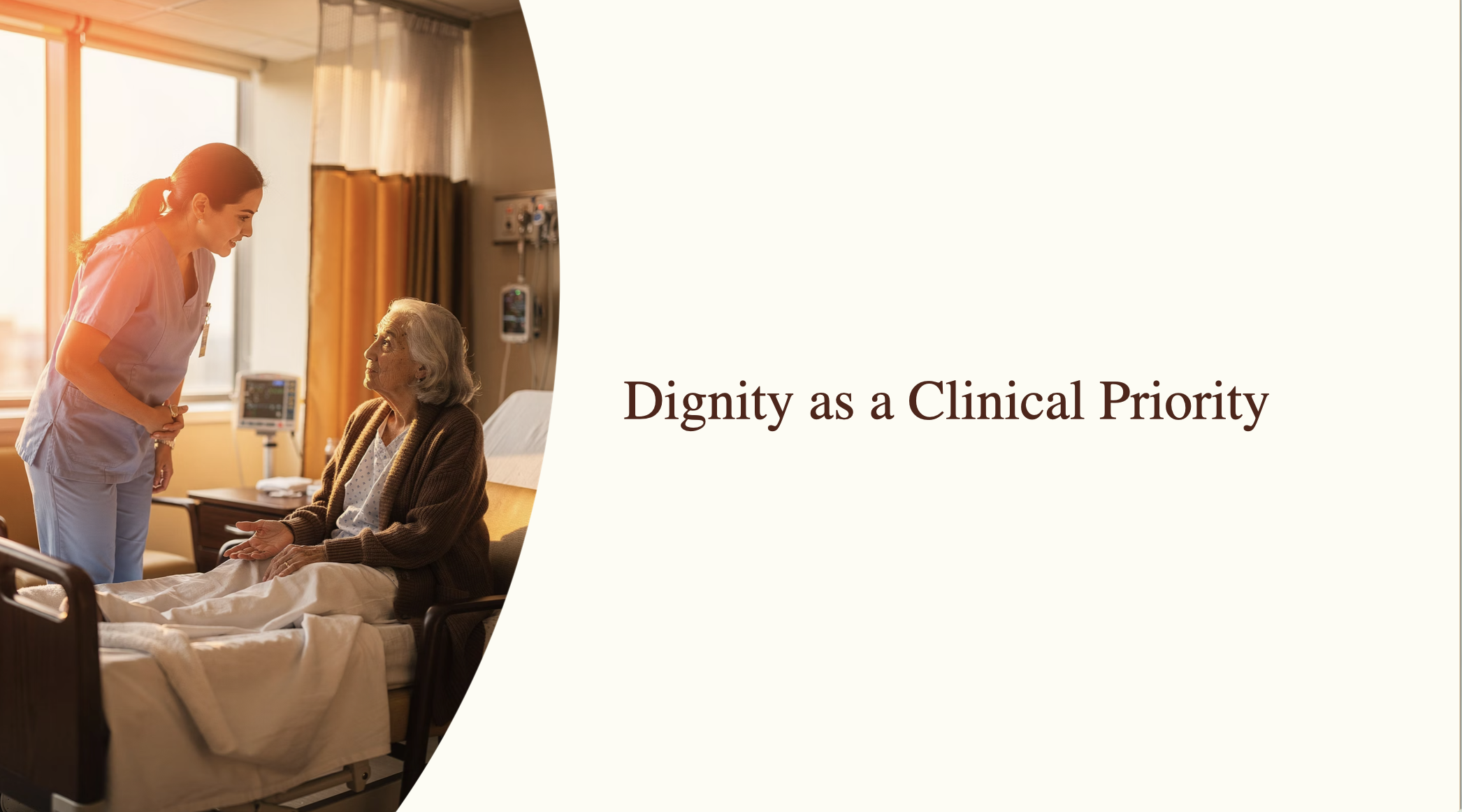
Lesson 7.4: Dignity as a Clinical Priority
Overview:
This lesson explores how dignity is expressed through small, everyday interactions in healthcare. Simple actions, such as how we speak, explain, listen, and acknowledge others, can help people … -
Lesson 7.5: Narrative Matters in Healing
Overview
This lesson highlights the importance of recognizing the patient’s story beyond symptoms and clinical data. Making brief space for narrative through simple, open-ended questions … -
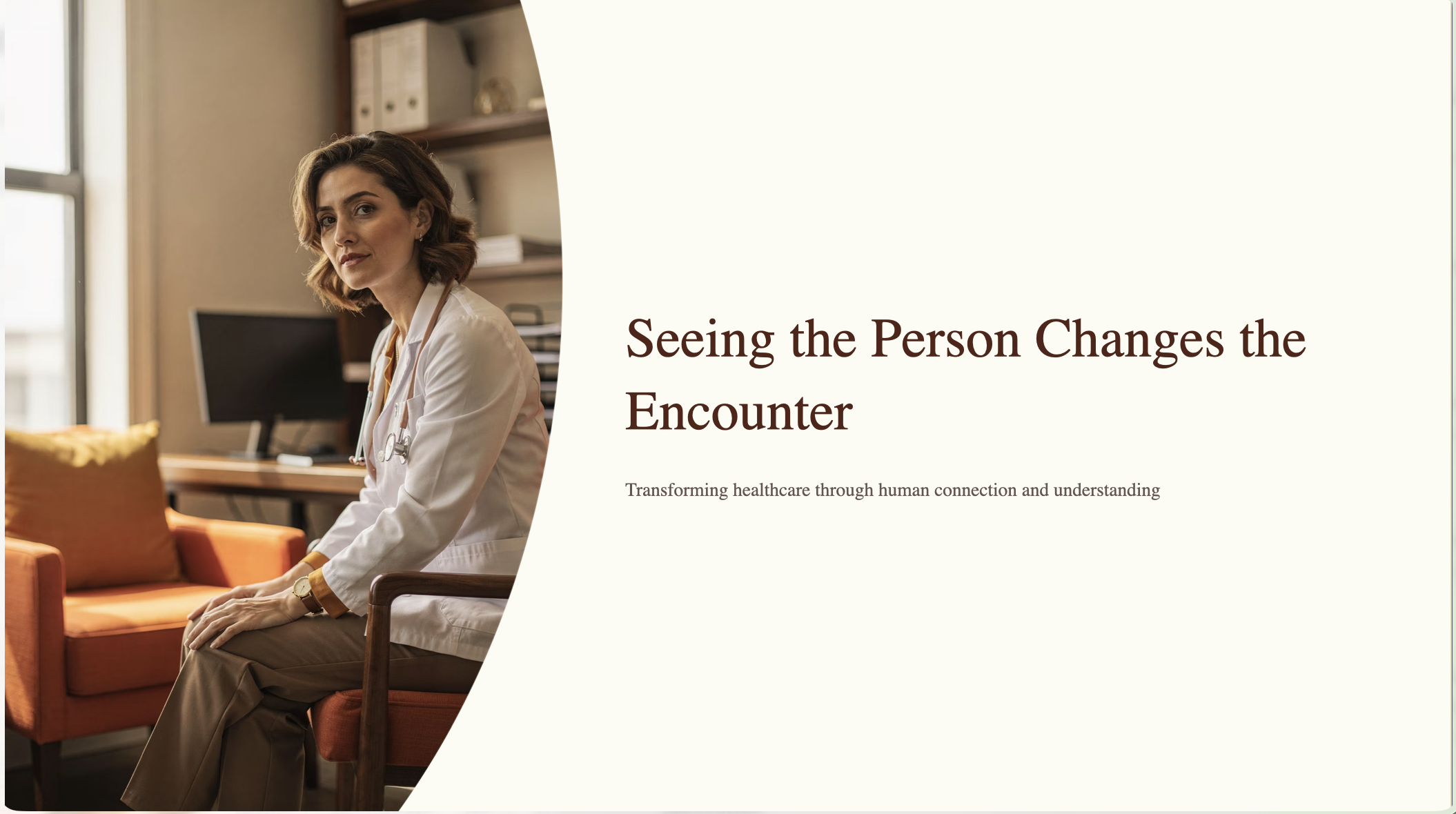
Lesson 7.6: Seeing the Person Changes the Encounter
Overview:
This lesson explores how seeing the person beyond the diagnosis can transform the tone, patience, and connection …
Module 8: Small Daily Practices to Anchor Compassion
-
Lesson 8.1: Small Daily Practices to Anchor Compassion
Overview:
Compassion often fades gradually under pressure and fatigue, not from a lack of caring but from a lack of space to replenish… -
The Power of the Pause
Overview:
This lesson introduces the pause as a simple yet powerful way to bring awareness into everyday work. Even a brief moment before speaking or moving to the next task can create space to reset, … -
Lesson 8.3: A One-Breath Reset
Overview:
This lesson highlights the power of a single conscious breath as a simple, accessible way to return to presence during a busy day. Even brief moments of noticing the body and breath … -
Lesson 8.4: Setting a Quiet Intention
Overview:
This lesson introduces the quiet role of intention in supporting presence and compassion. A simple, silent intention before a task or conversation can gently guide attention and reconnect … -
Lesson 8.5: Micro-Practices in Difficult Moments
Overview:
Compassion is often most tested during moments of conflict, urgency, and strong emotion. This lesson focuses on simple micro-practices, such as pauses, breaths, and quiet intentions, … -
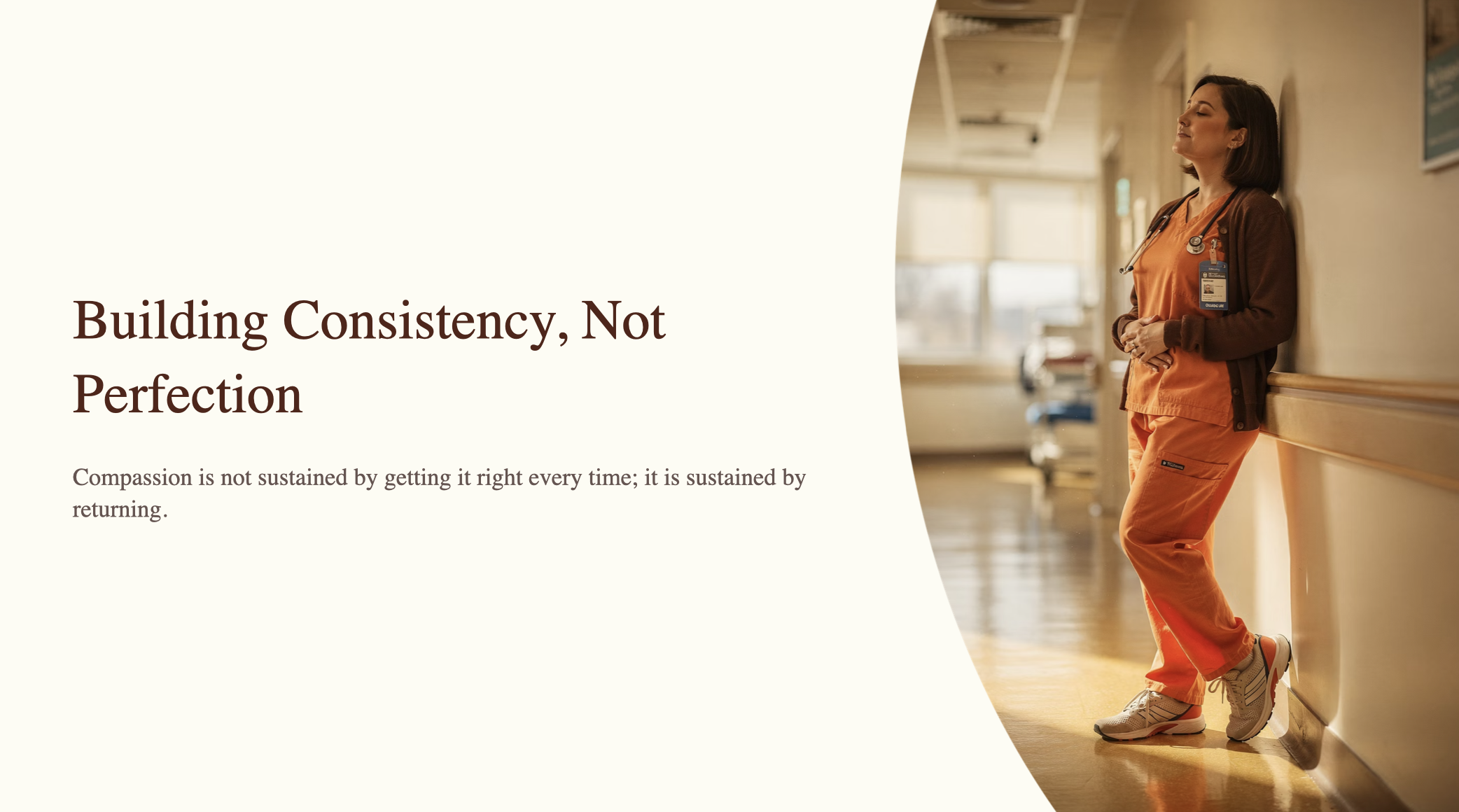
Lesson 8.6: Building Consistency, Not Perfection
Overview:
Compassion is sustained not by perfection, but by returning through small, everyday resets of awareness and intention. This lesson highlights how brief pauses, a single breath, …